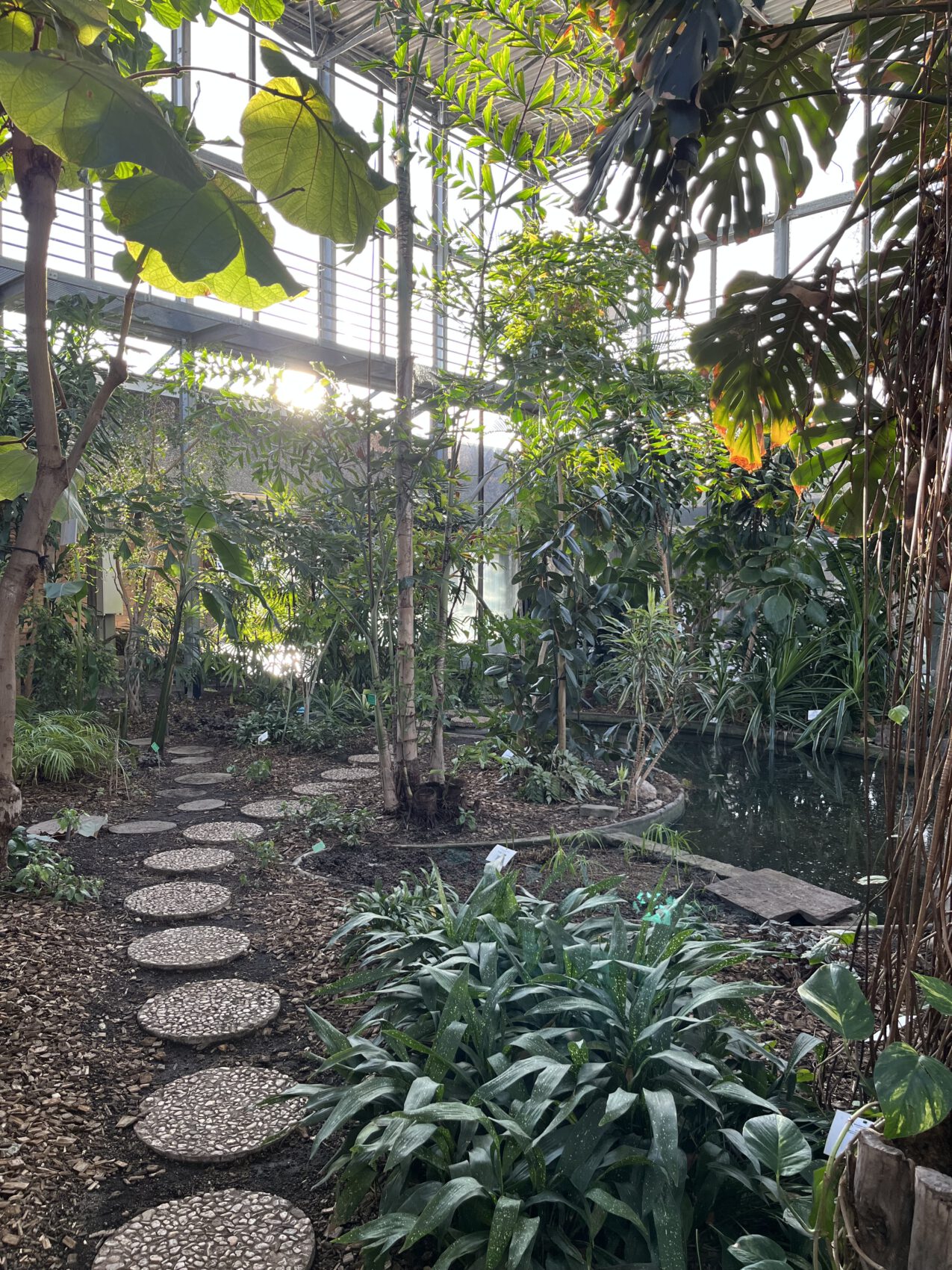
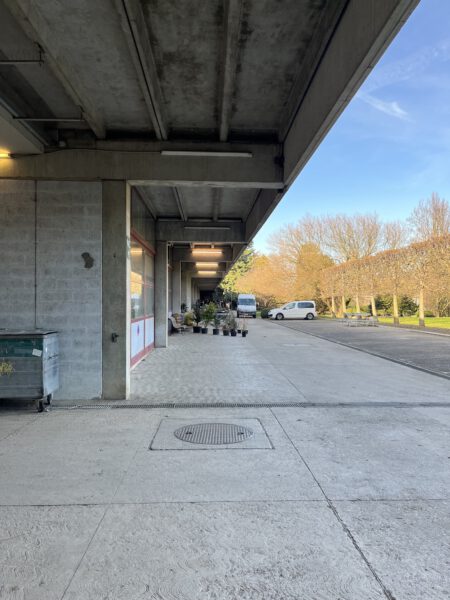
Dieser Wettbewerb sieht die Erweiterung eines modernistischen Campus der Schule für Gartenbau und Landschaftsarchitektur in Lullier im Kanton Genf vor. Es ist ein Ort des Anbauens und Pflegens, ein Ort der Verbindungen zwischen der menschlichen und der pflanzlichen Welt. Wie lässt sich dieser Standort erweitern, ohne seine landschaftliche und architektonische Qualität zu überschreiben? Das Projekt “Canopée” interpretiert die Schule als Haus in den Bäumen. Der Landschaftsraum fließt darunter weiter, ein neuer Blick auf den Standort und die Landschaft öffnet sich.
This competition calls for the expansion of a modernist campus for the School of Horticulture and Landscape Architecture in Lullier, in the canton of Geneva. It is a place of cultivation and care, where the human and plant worlds intersect. How can the site be expanded without compromising its landscape and architectural sensibility? The “Canopée” project reimagines the school as a house in the trees: the landscape flows beneath, and a new perspective on the site and its surroundings opens up.
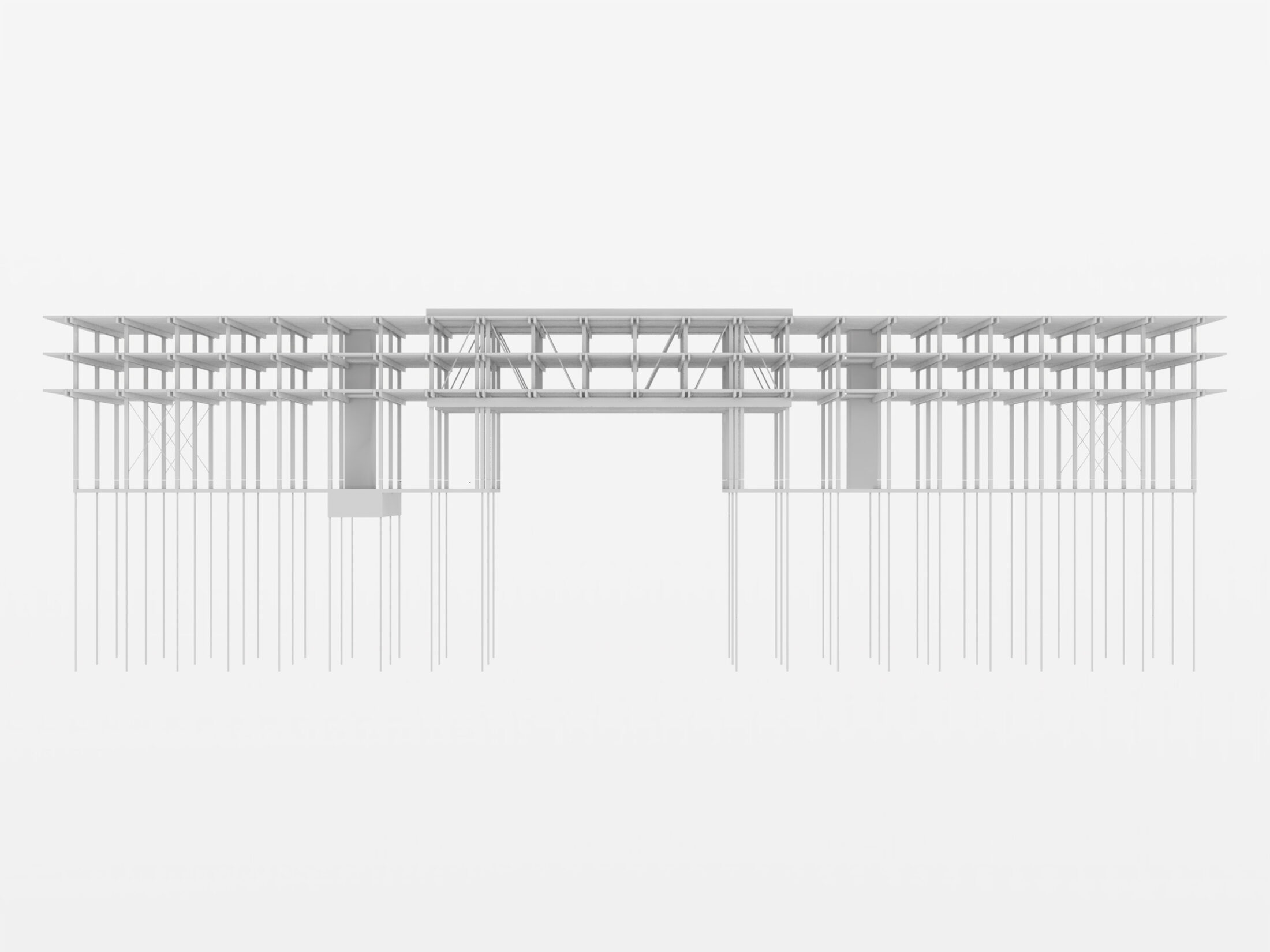
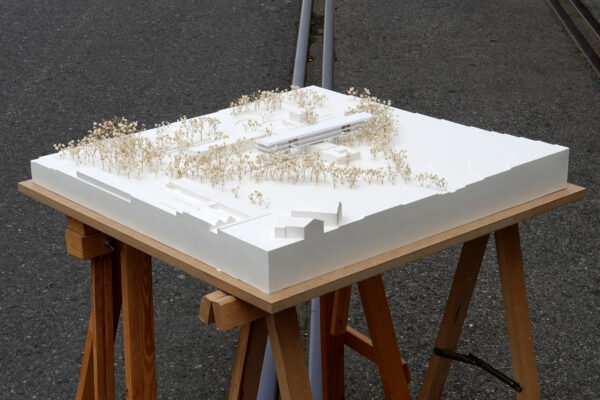
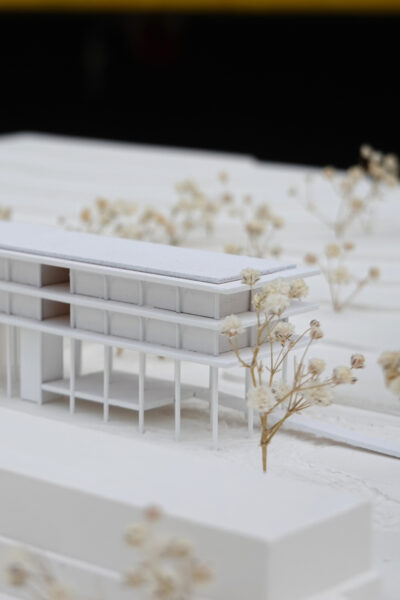
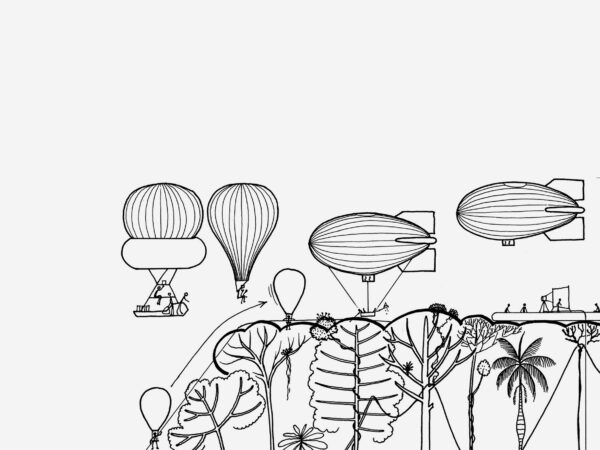
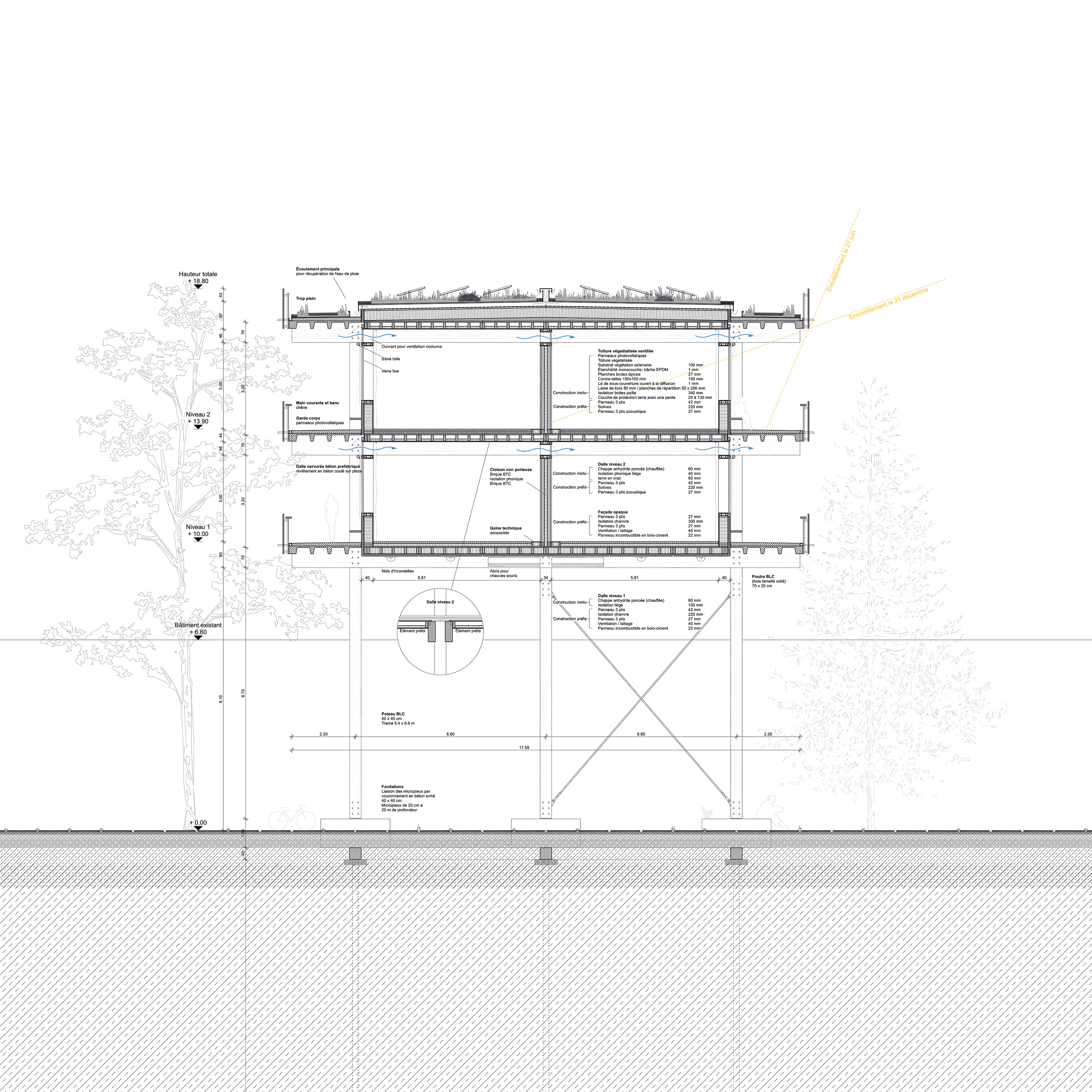
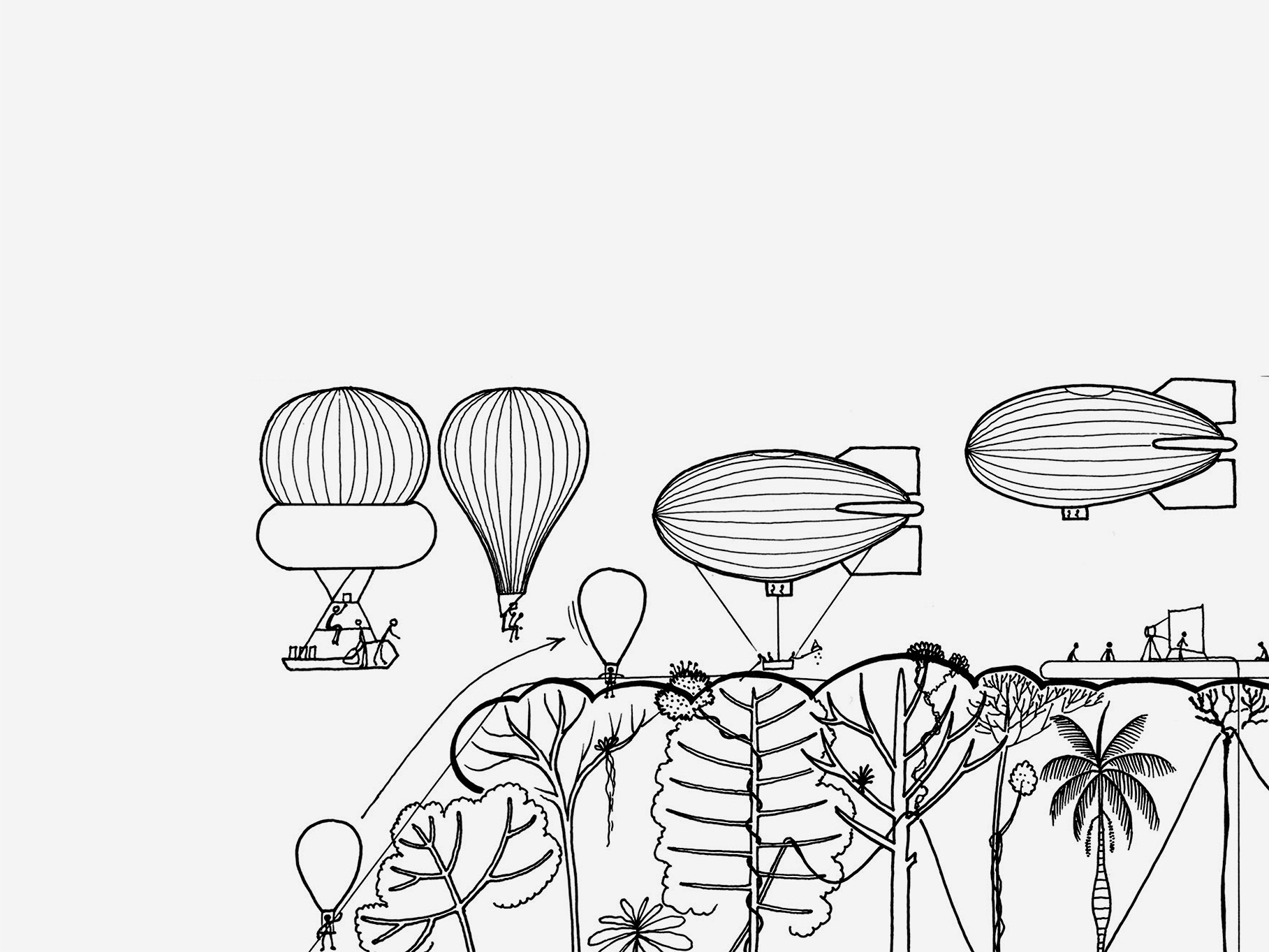
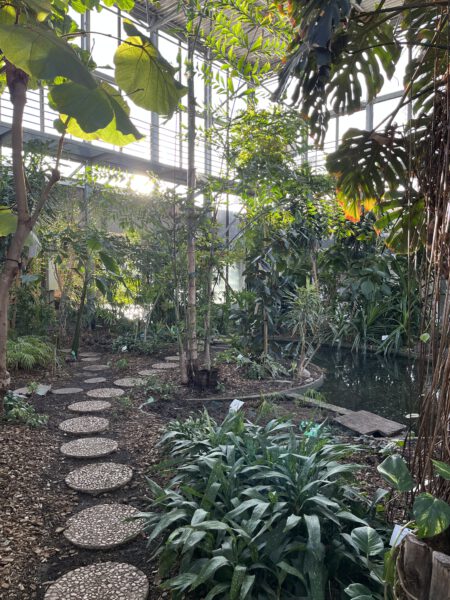
Das Projekt zeichnet sich durch maximale Erhaltung des gewachsenen Bodens und die Minimierung beheizter Volumen aus – die gesamte Erschliessung liegt aussen. Es schafft einen Lernort, der Biodiversität und die Verbindung zwischen Mensch und Lebendigem in den Vordergrund stellt. Nach dem Vorbild des „Radeau des cimes” von Francis Hallé eröffnet es einen neuen Blickpunkt auf Bäume, Gärten und begrünte Dächer – und von den Klassenzimmern aus auf das gesamte Schulgelände, die angrenzenden Parzellen und Gehölzstreifen, und in der Ferne den Lac Léman, das Jura, Mont Salève und die Alpen.
The project maximises the preservation of natural ground and minimises heated volume – all circulation runs along the exterior. It creates a learning environment that foregrounds biodiversity and the connection between humans and the living world. Taking its cue from Francis Hallé’s “Radeau des cimes,” it offers a new vantage point onto trees, gardens, and green roofs: from the classrooms, a view across the entire school grounds, the adjacent plots and wooded strips, and in the distance Lac Léman, the Jura, Mont Salève, and the Alps.
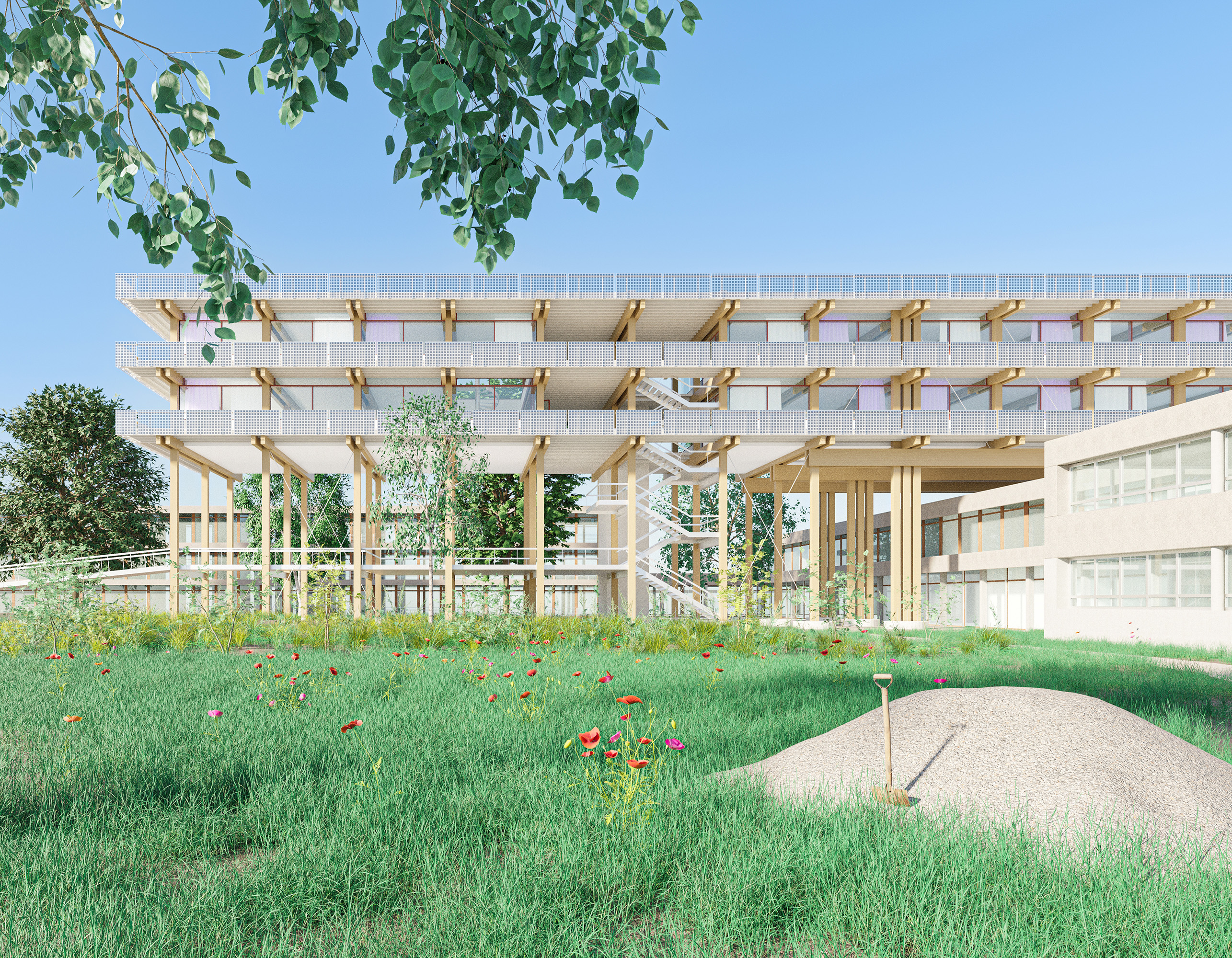
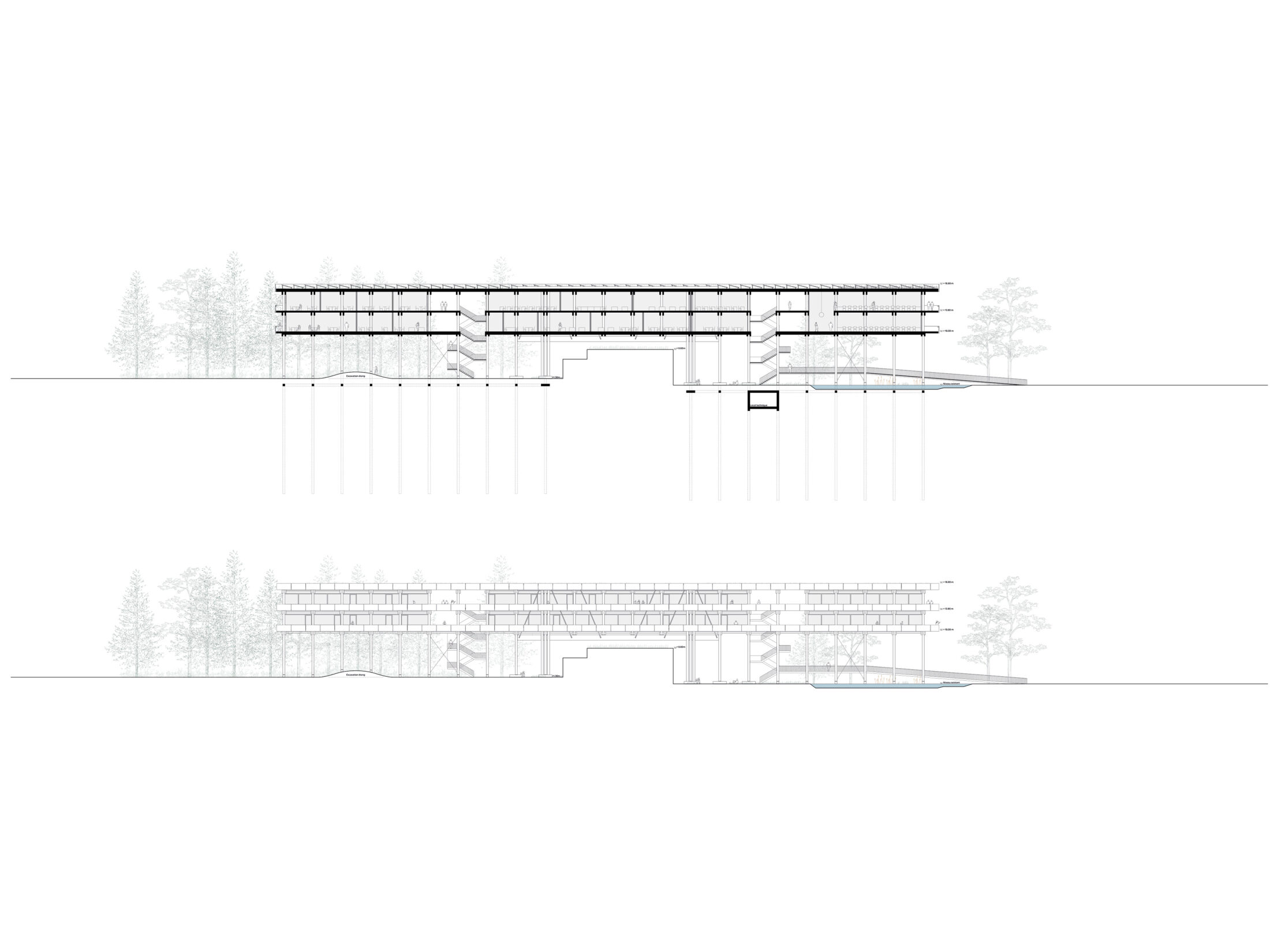
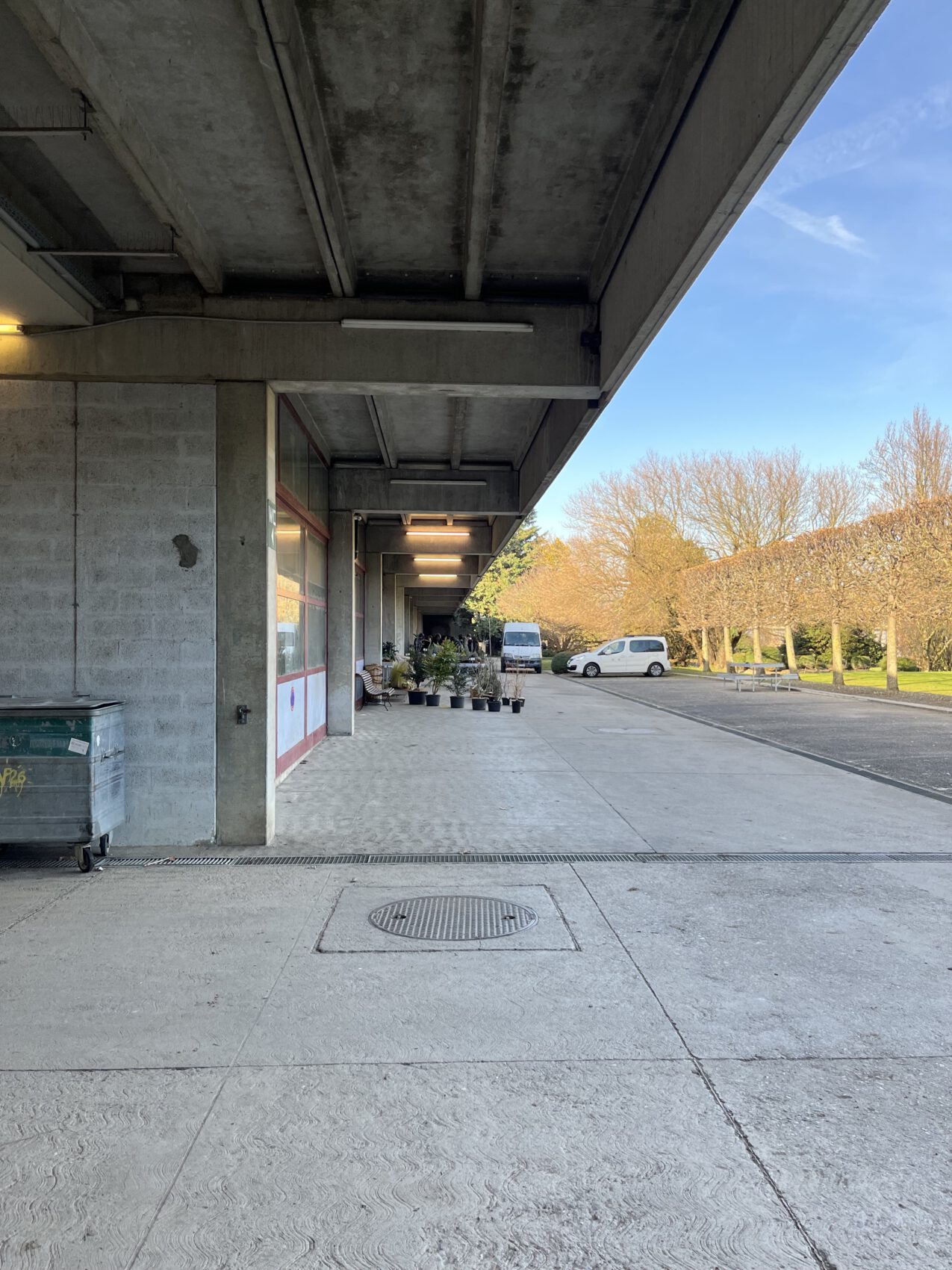
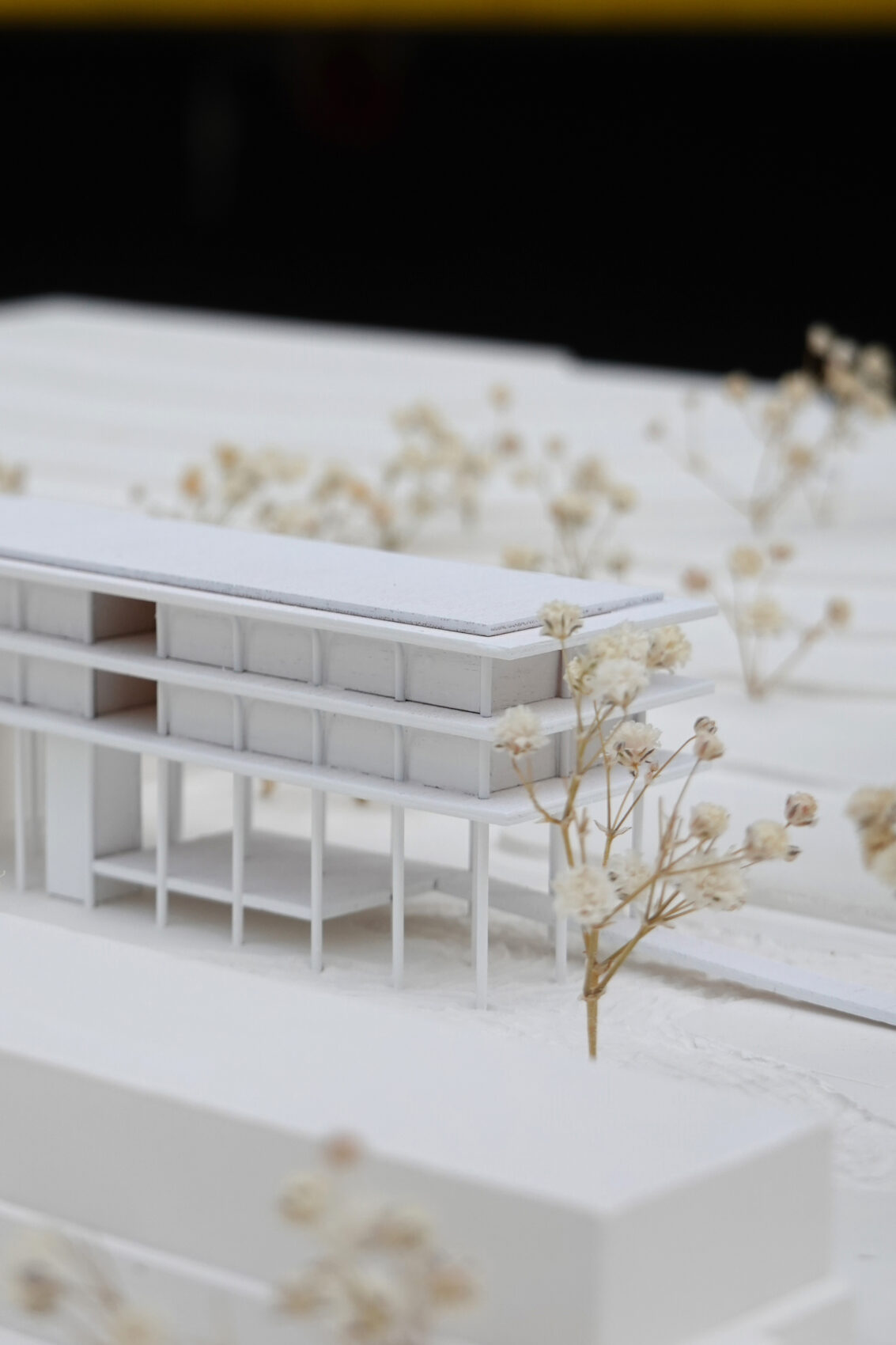
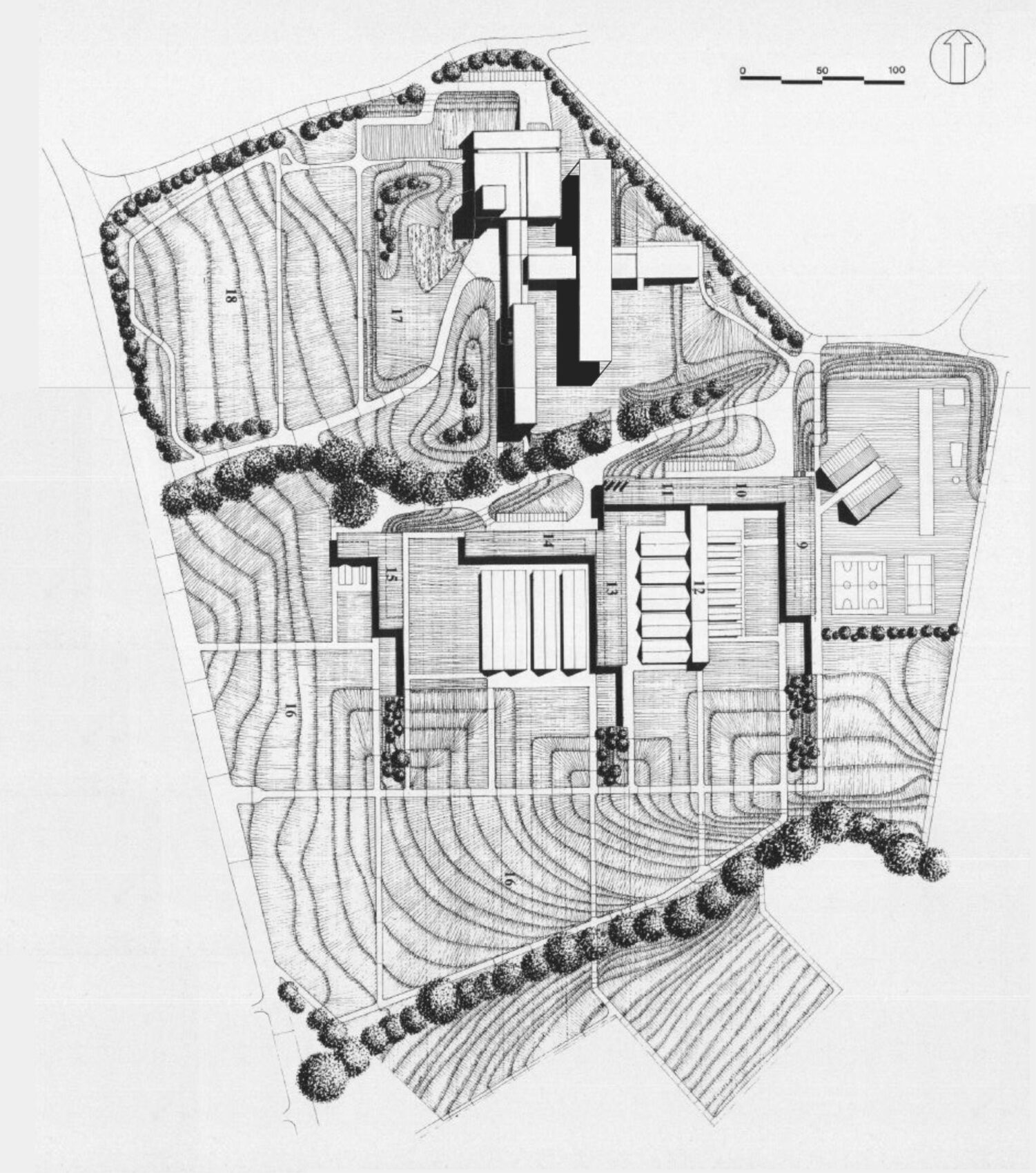
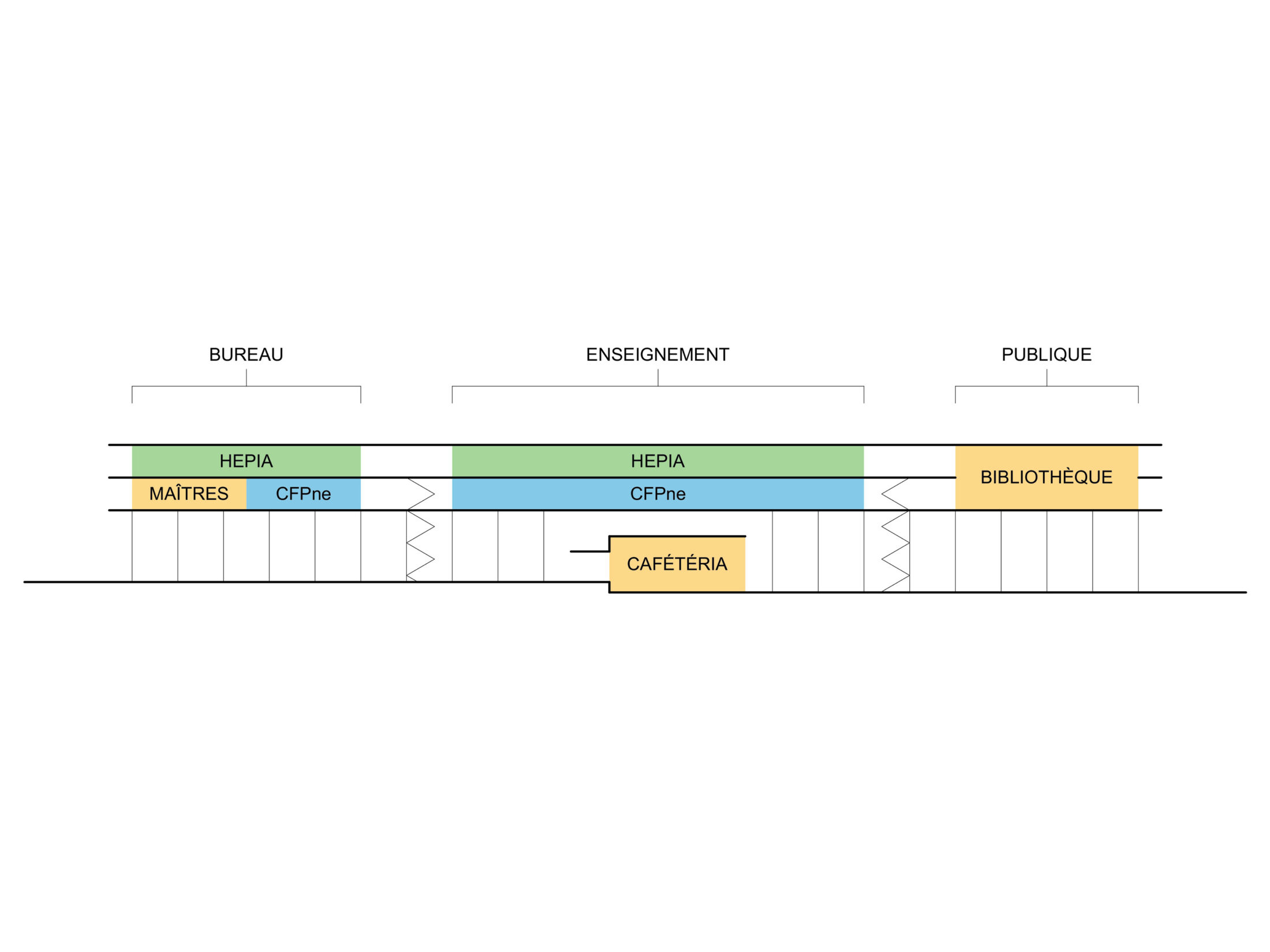
Der Neubau verlängert die Orthogonalität der Bauten von 1970: ein langgestreckter, vollständig aufgeständerter Baukörper, der den Nord- und Südteil des Campus verbindet. Seine Länge und Horizontalität knüpfen an die modernistische Formensprache der Bestandsbauten an. Die Gestaltung ist schlicht, mit dem Charakter eines edlen Zweckbaus – die Materialien weitgehend roh belassen, Farbe nur an wenigen Stellen eingesetzt.
The new building extends the orthogonality of the 1970 structures: an elongated, fully elevated volume connecting the northern and southern parts of the campus. Its length and horizontality echo the modernist language of the existing buildings. The design is spare, with the character of a building of noble utility – materials left largely raw, colour used only in a few places.
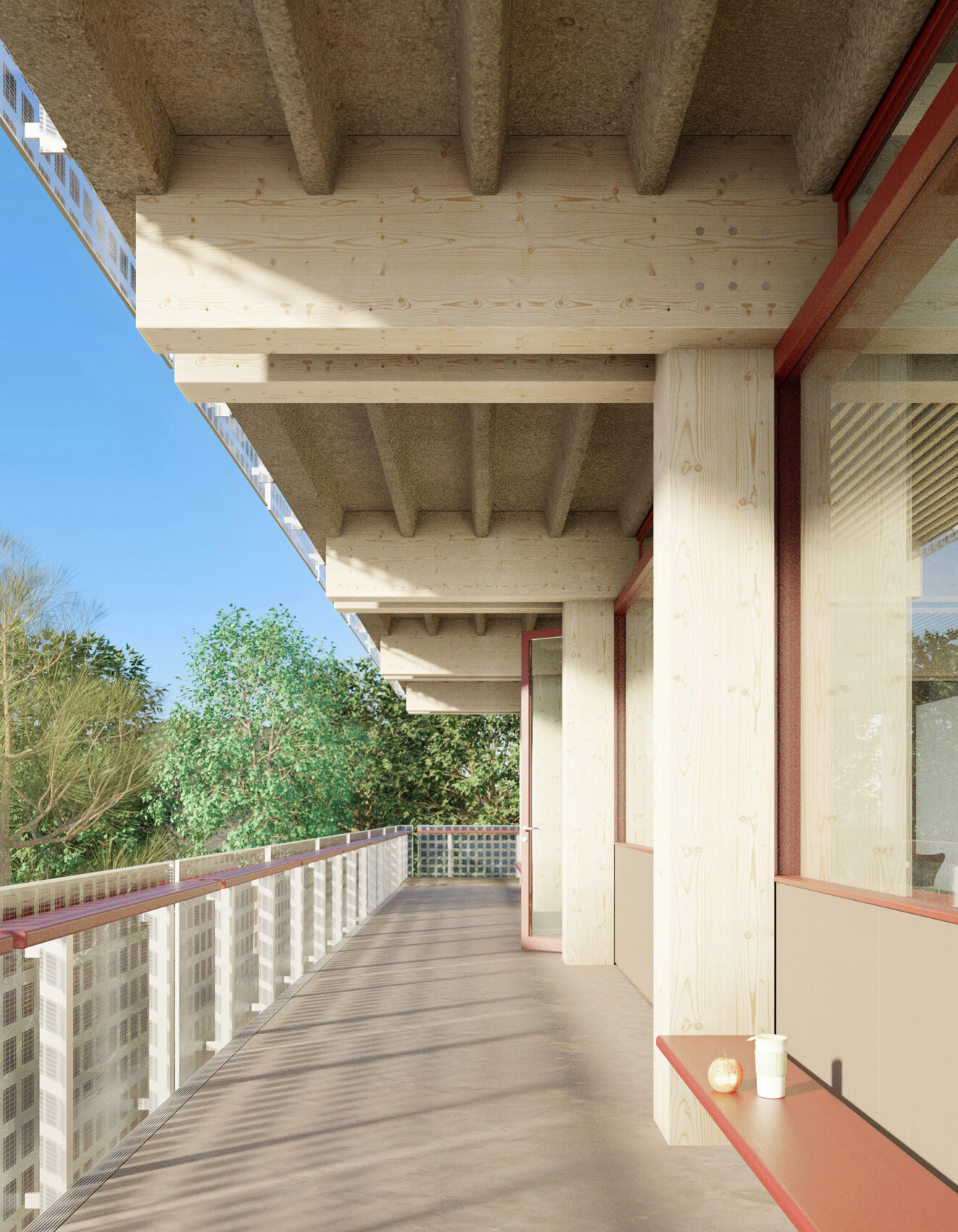
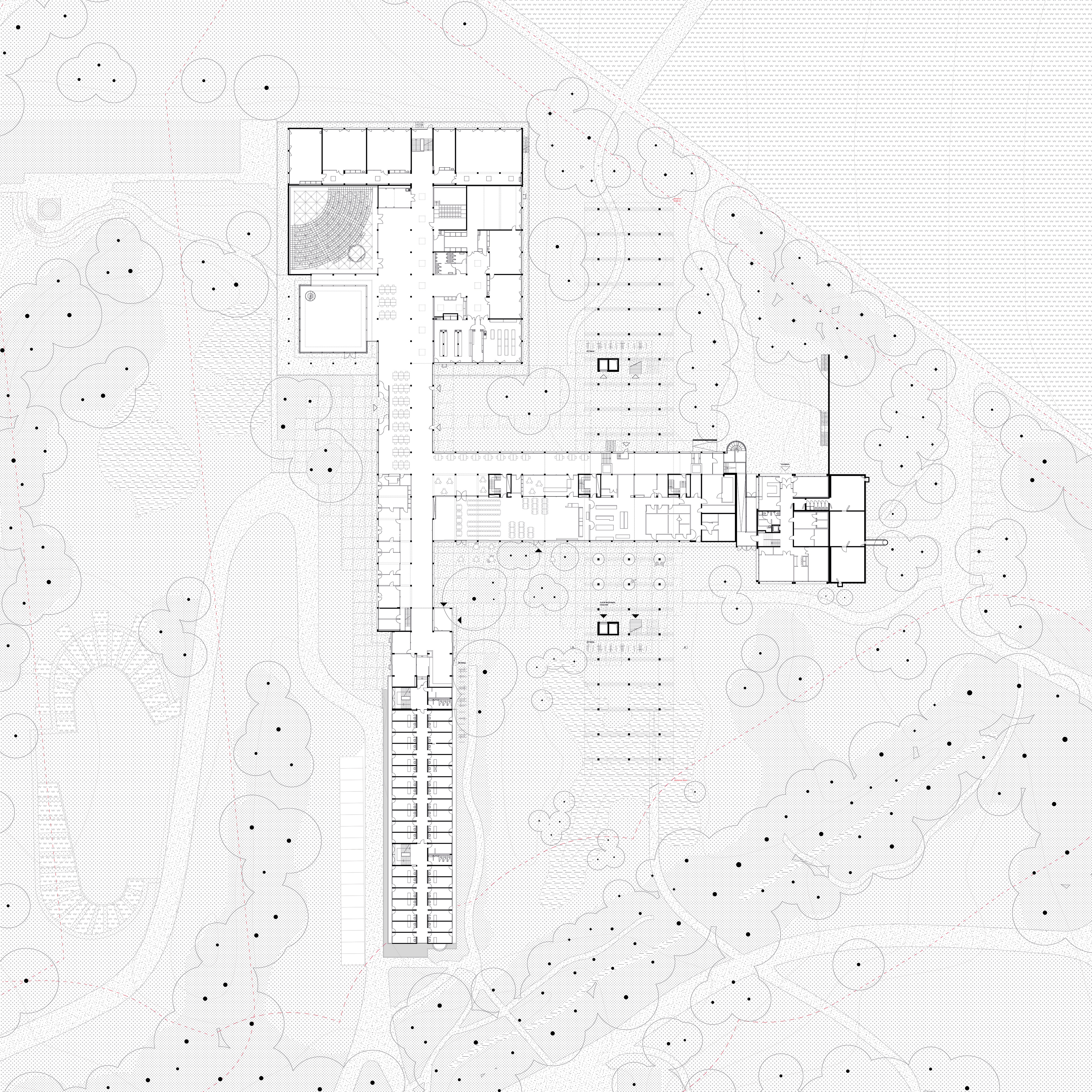
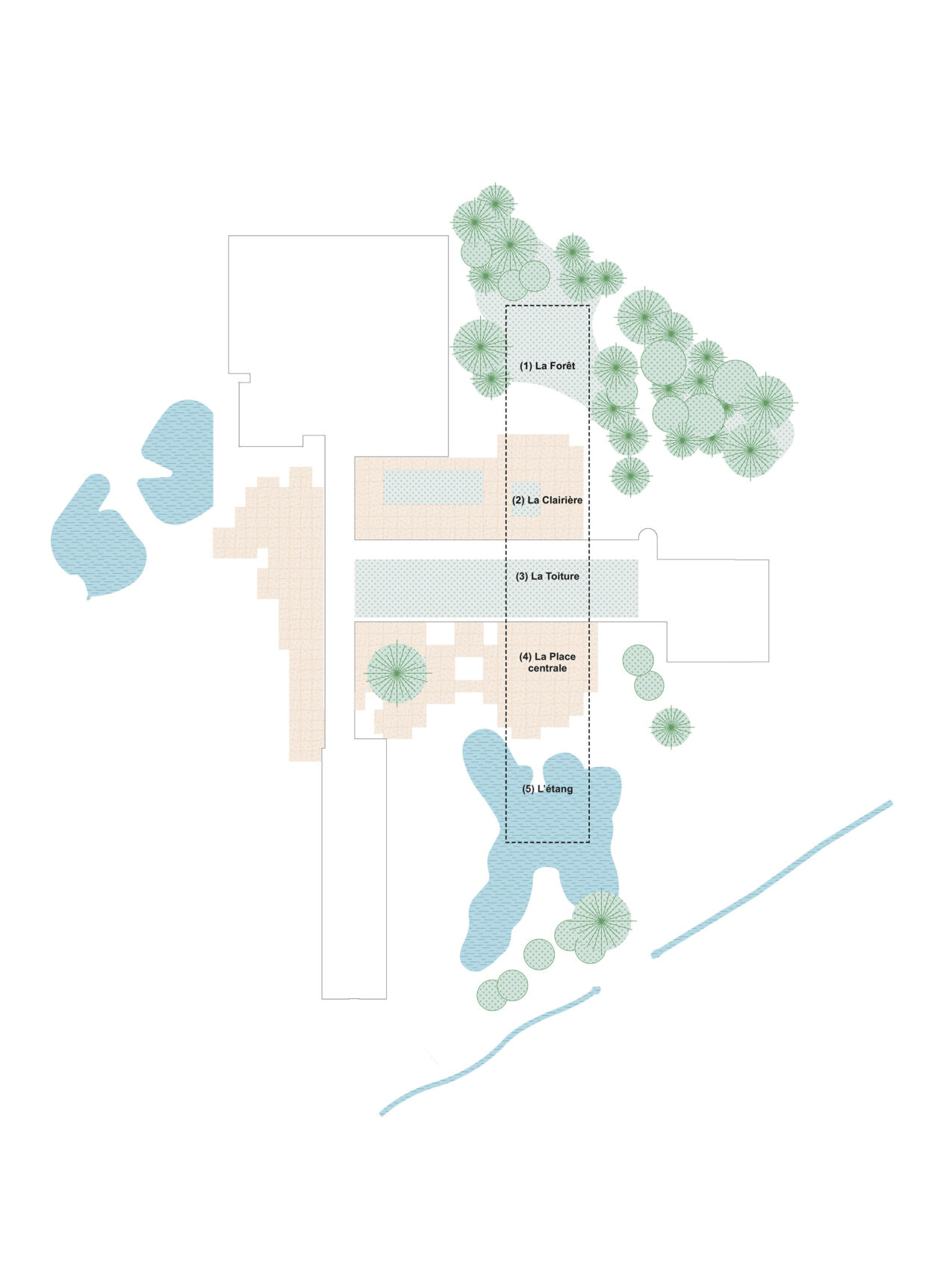
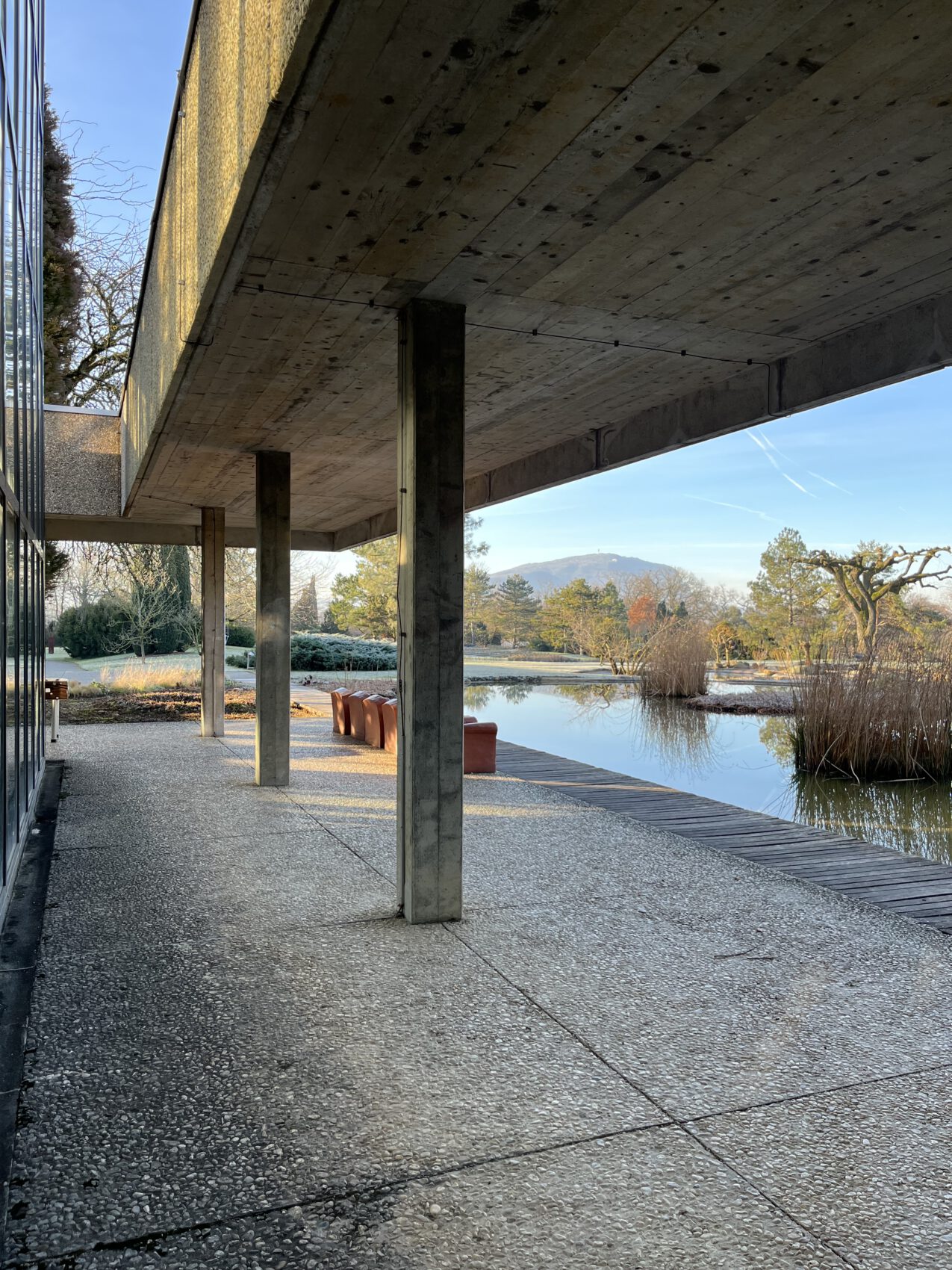
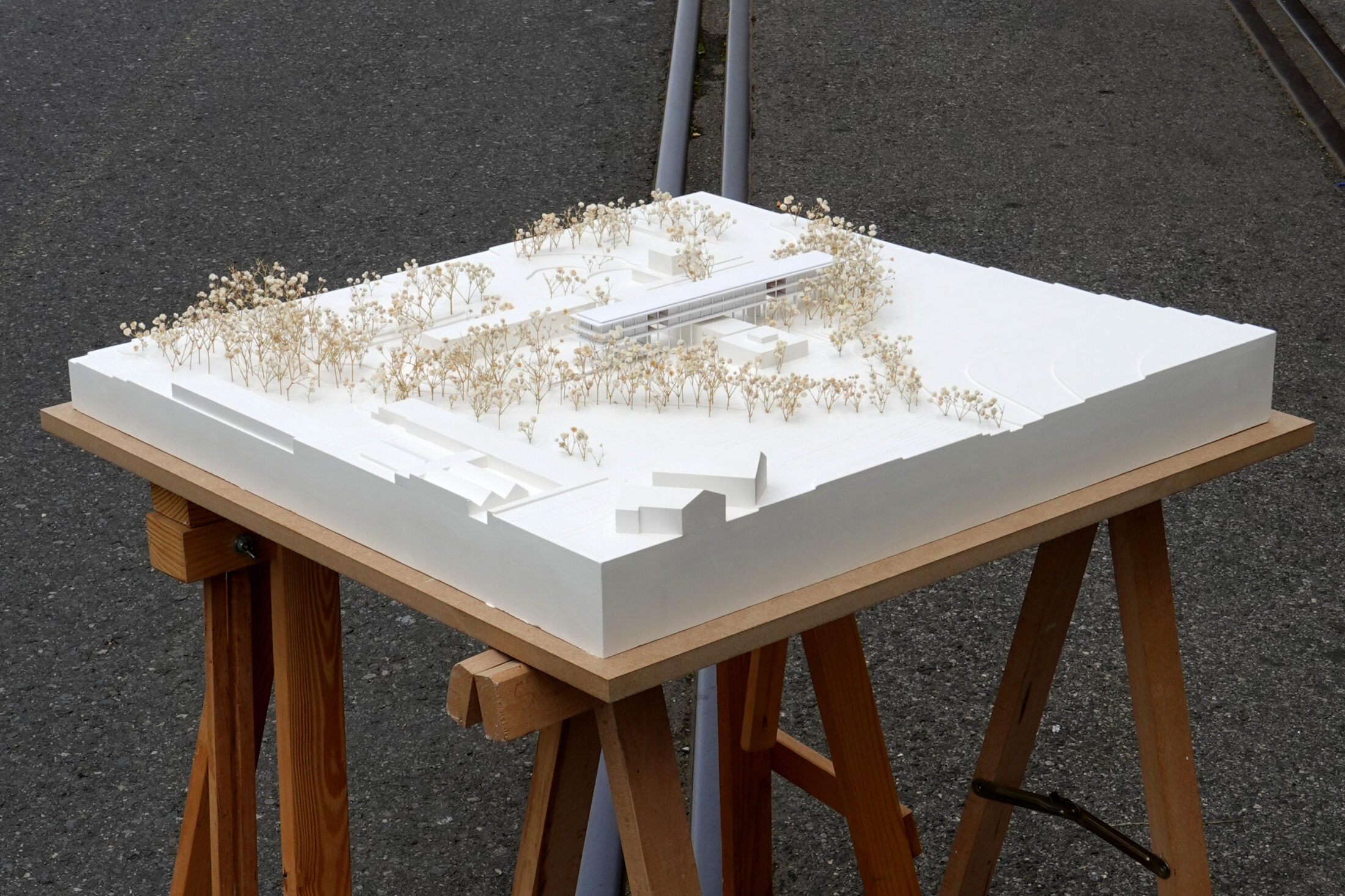
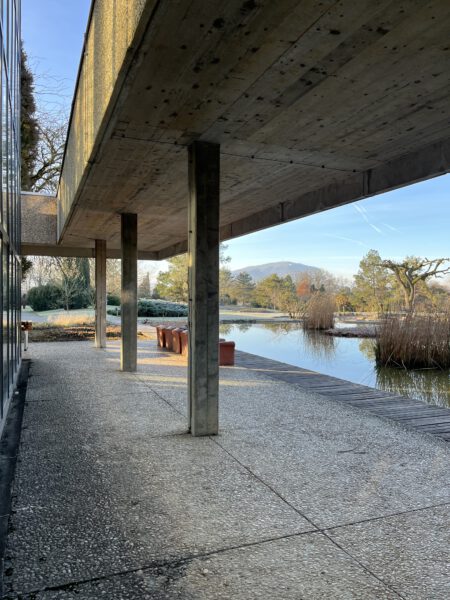
Das Projekt überspannt unterschiedliche Lebensräume: Im Norden fügen sich die Stützen zwischen die Baumstämme; die bestehende Zedern-Pflanzung wird durch Eichen ergänzt. Unter dem aufgeständerten Baukörper wird die Topografie so modelliert, dass Regenwasser darunter fliesst und Schattenpflanzen gedeihen können. Im Süden liegt ein neu angelegter Teich als Regenwasserspeicher. Eine in die Struktur eingehängte Terrasse erlaubt es, das Wasser räumlich nah zu erleben und zu überblicken, während das Teichufer als Lebensraum geschützt bleibt. Insgesamt bleibt die Identität der Aussenanlagen erhalten. Die bestehenden Waschbetonplatten werden bis zu den Zugängen des Neubaus weitergeführt und punktuell durch Beete, Wiesen und Kletterpflanzen unterbrochen. Der zentrale Platz verlagert sich nach Osten – von hier aus sind Mensa, Bestandsgebäude und Neubau direkt erreichbar.
The project spans different habitats: to the north, the columns thread between the tree trunks; the existing cedar plantation is supplemented by oaks. Beneath the elevated structure, the topography is shaped to guide rainwater and allow shade-loving plants to thrive. To the south lies a newly created pond serving as a rainwater reservoir. A terrace suspended from the structure allows visitors to experience the water at close range and look out over it, while the pond’s edge remains protected as a habitat. The identity of the outdoor areas is otherwise preserved: the existing exposed aggregate concrete paving is extended to the entrances of the new building, punctuated by beds, lawns, and climbing plants. The central plaza shifts eastward – from here, the canteen, existing building, and new addition are all directly accessible.