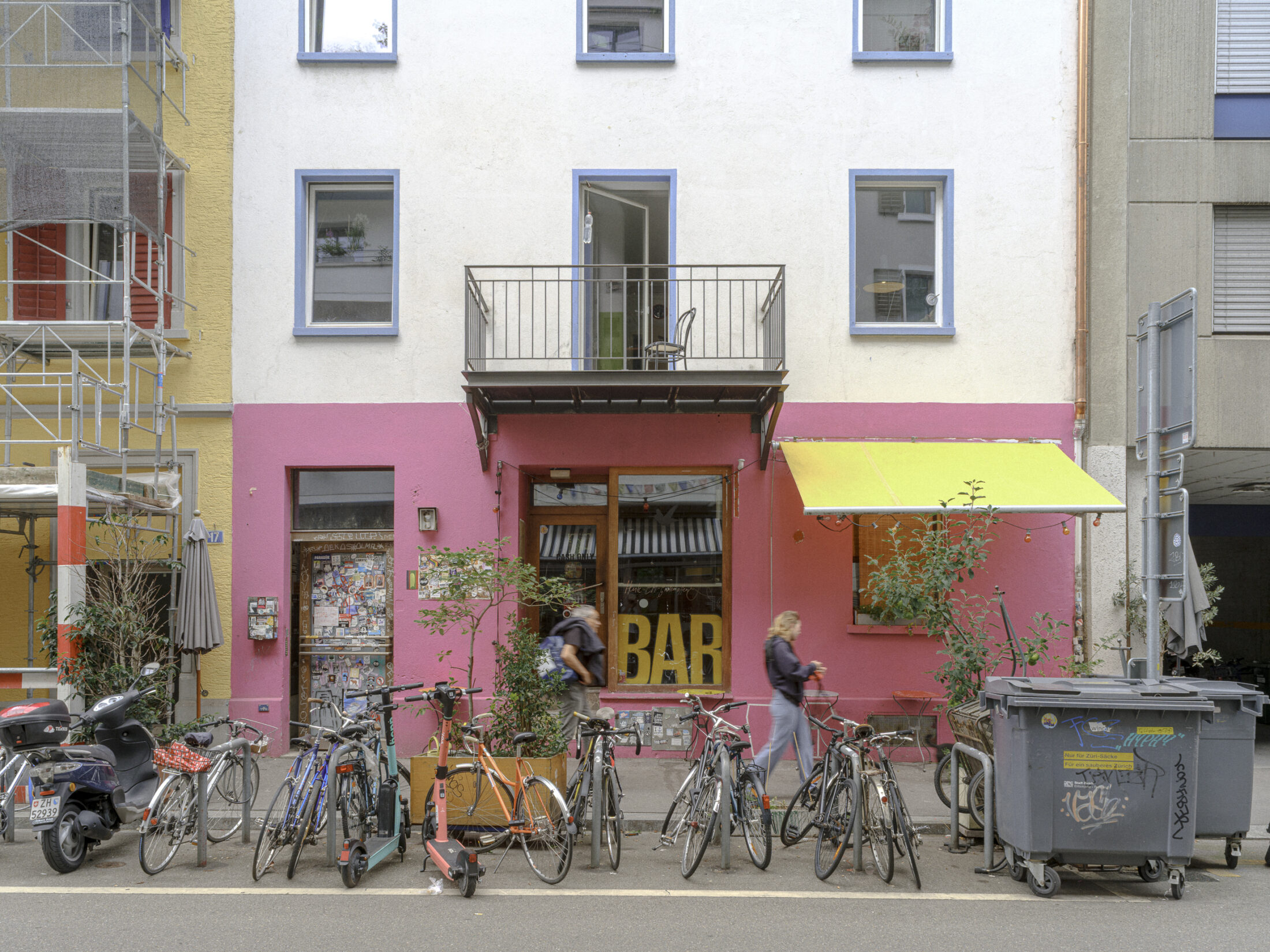
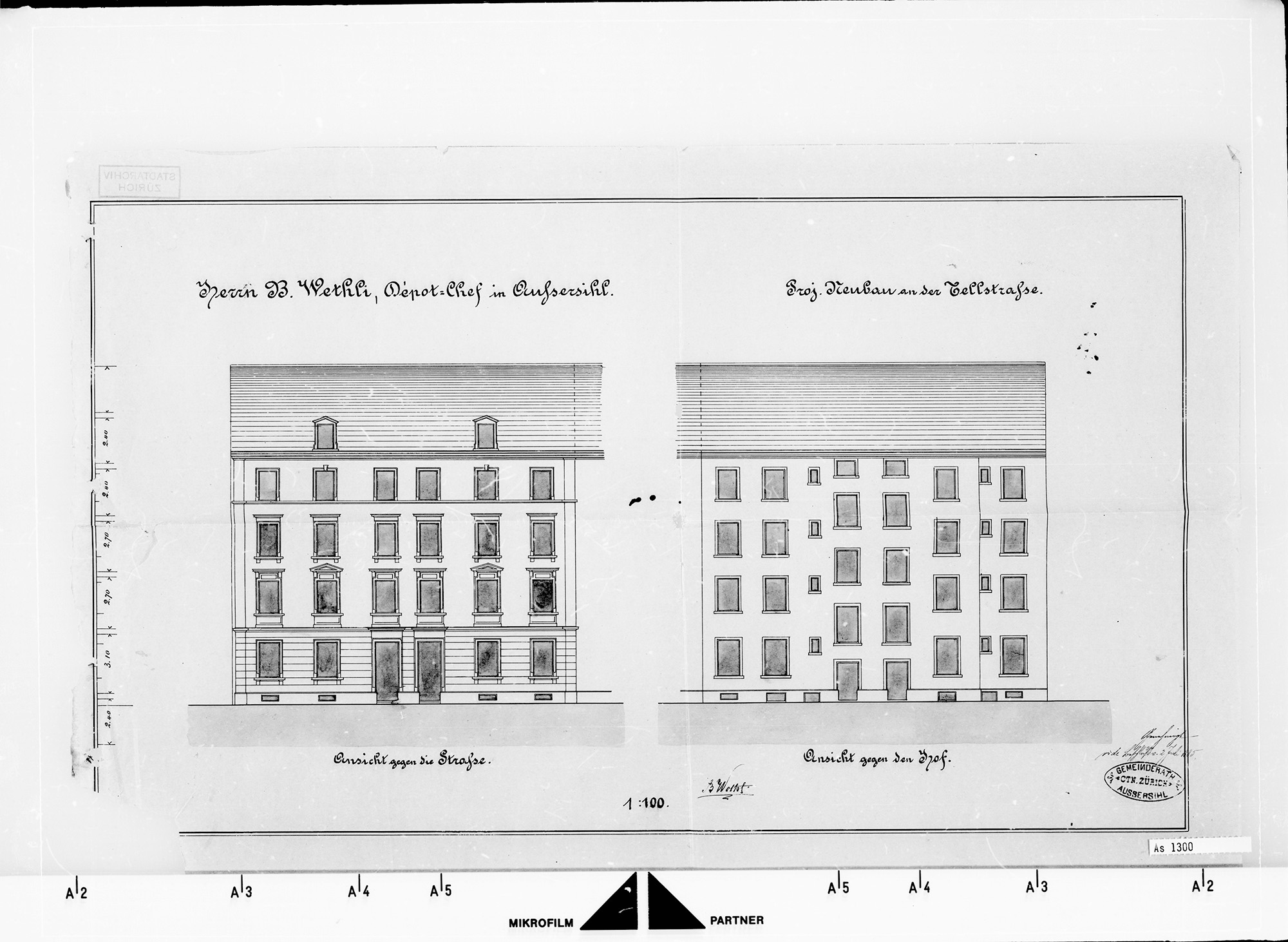
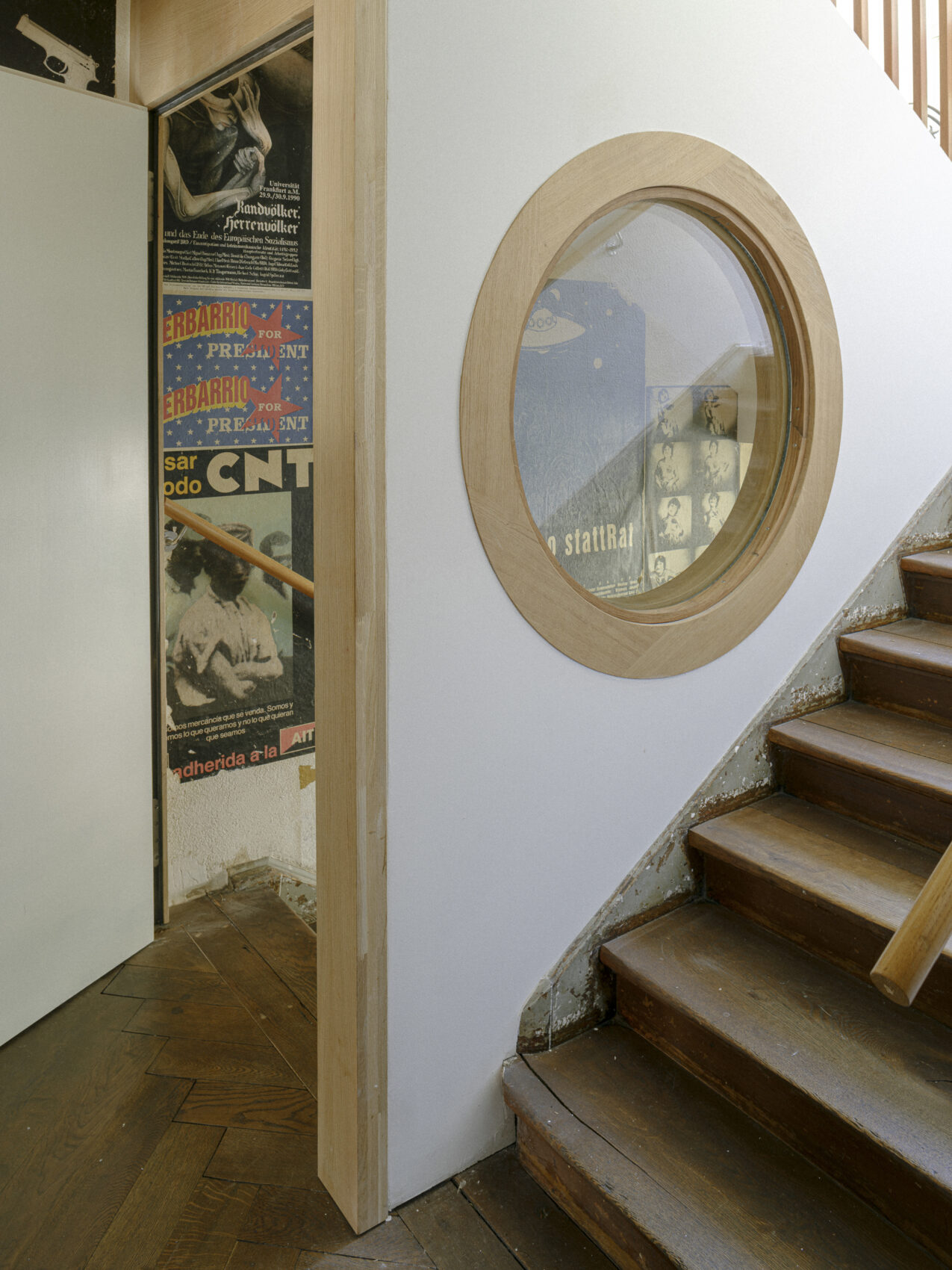
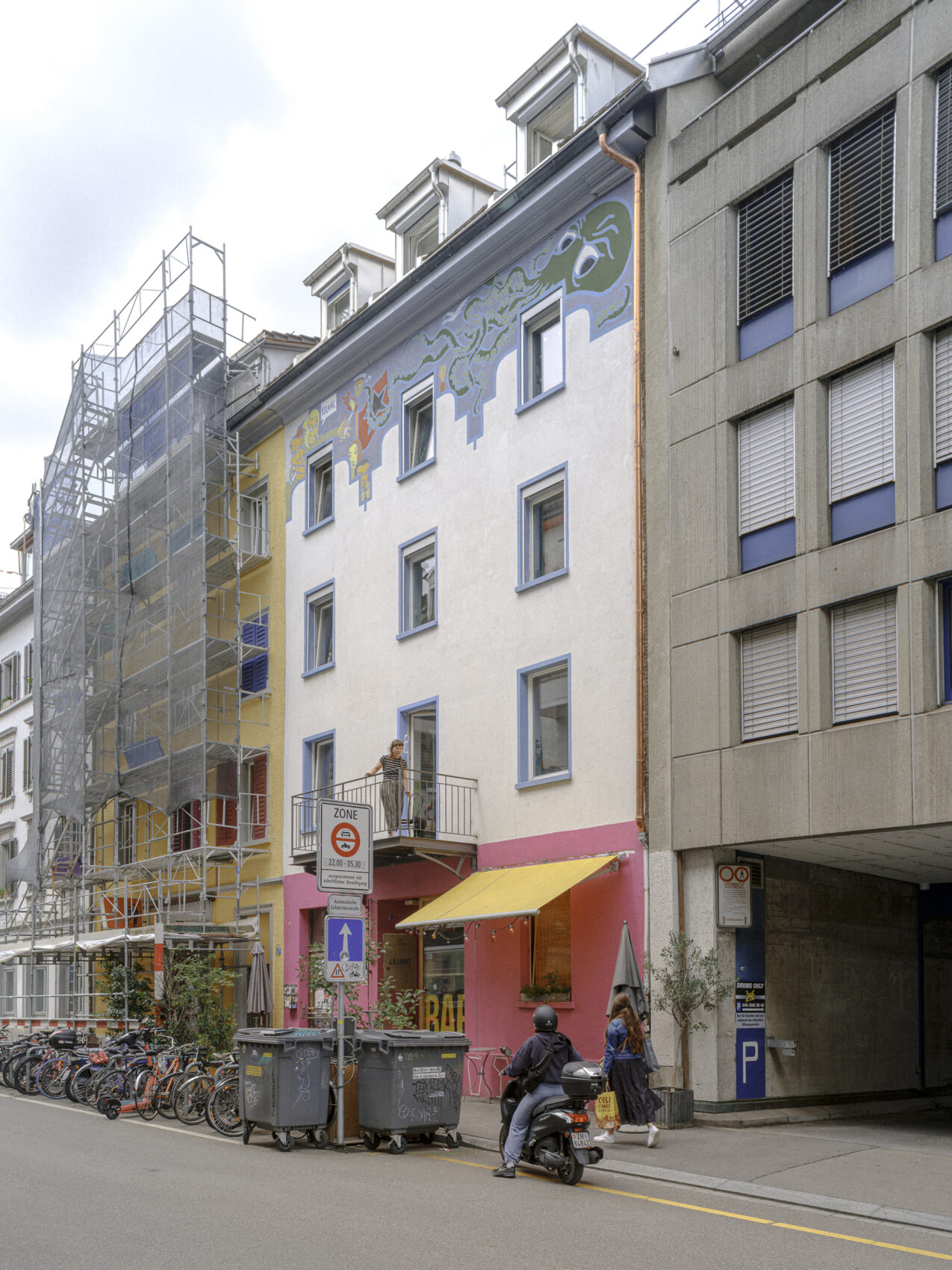

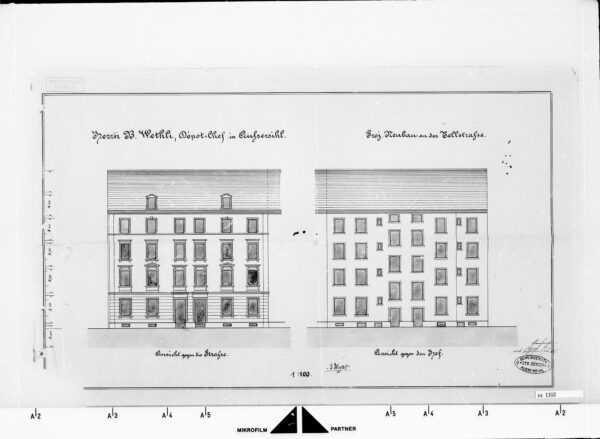
Das Projekt umfasst den Dachausbau eines genossenschaftlichen Wohnprojektes in Zürich, dessen Ursprung in der Hausbesetzer*innen-Bewegung liegt. Das 1855 im Arbeiterinnenquartier Aussersihl errichtete Haus wurde in den 1990er Jahren von den heutigen Bewohner*innen erworben. Sie bewohnen das Haus seither gemeinschaftlich zu bezahlbaren Mieten – und entziehen es damit der Aufwertung des Quartiers. Das Gebäude wurde in Eigenarbeit renoviert und über die Jahre an wandelnde Bedürfnisse angepasst, zuletzt durch den aktuellen Dachausbau.
This project involves the conversion of the attic space in a cooperative housing project in Zurich that has its roots in the squatters’ movement. Built in 1855 in the working-class neighborhood of Aussersihl, the building was acquired by its current residents in the 1990s. Since then, they have lived in the building collectively at affordable rents – thereby shielding it from the gentrification of the neighborhood. The building was renovated by the residents themselves and adapted over the years to changing needs, most recently through the current roof conversion.
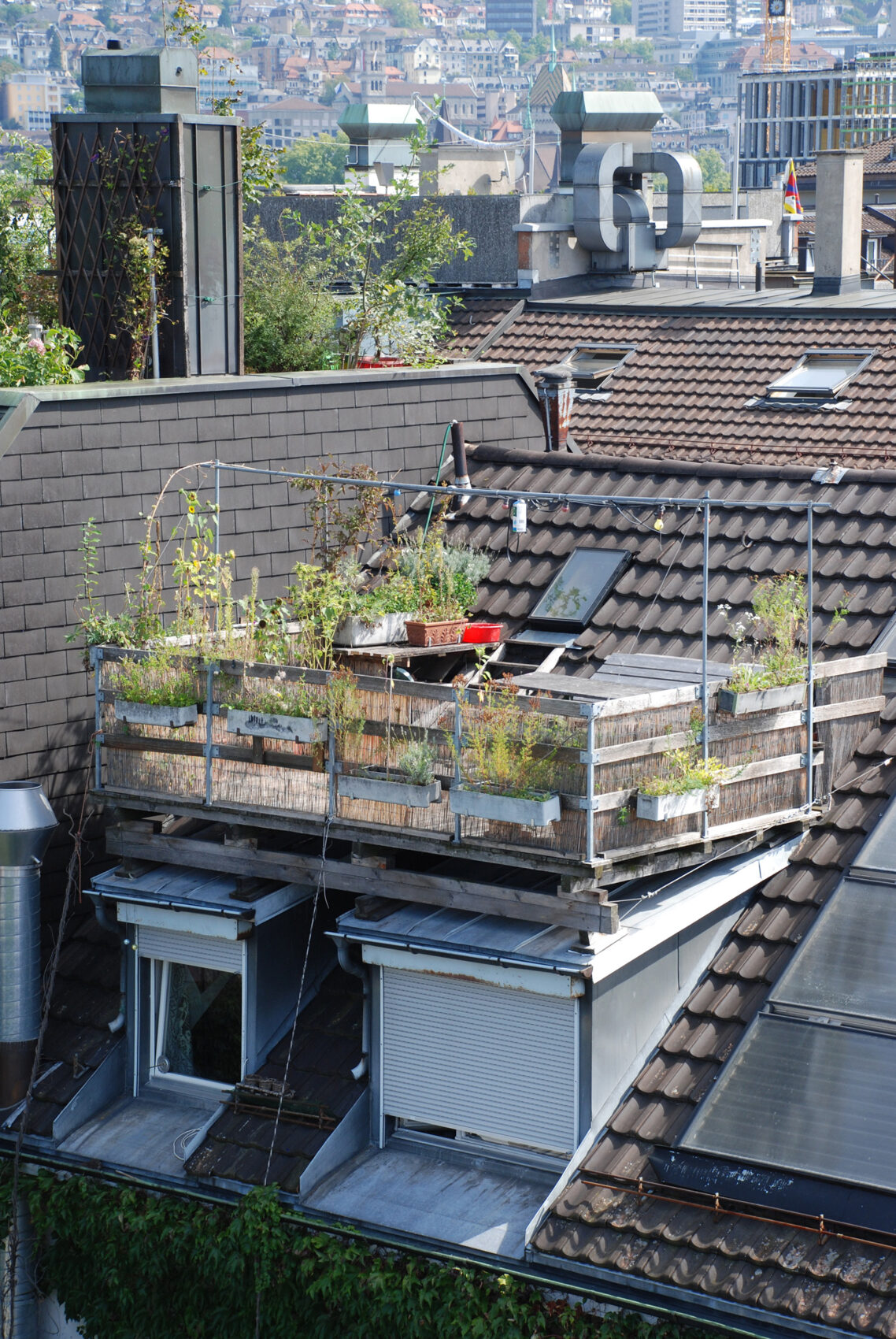
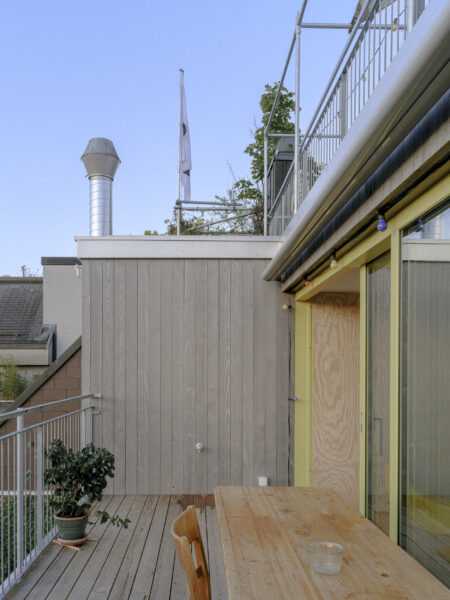
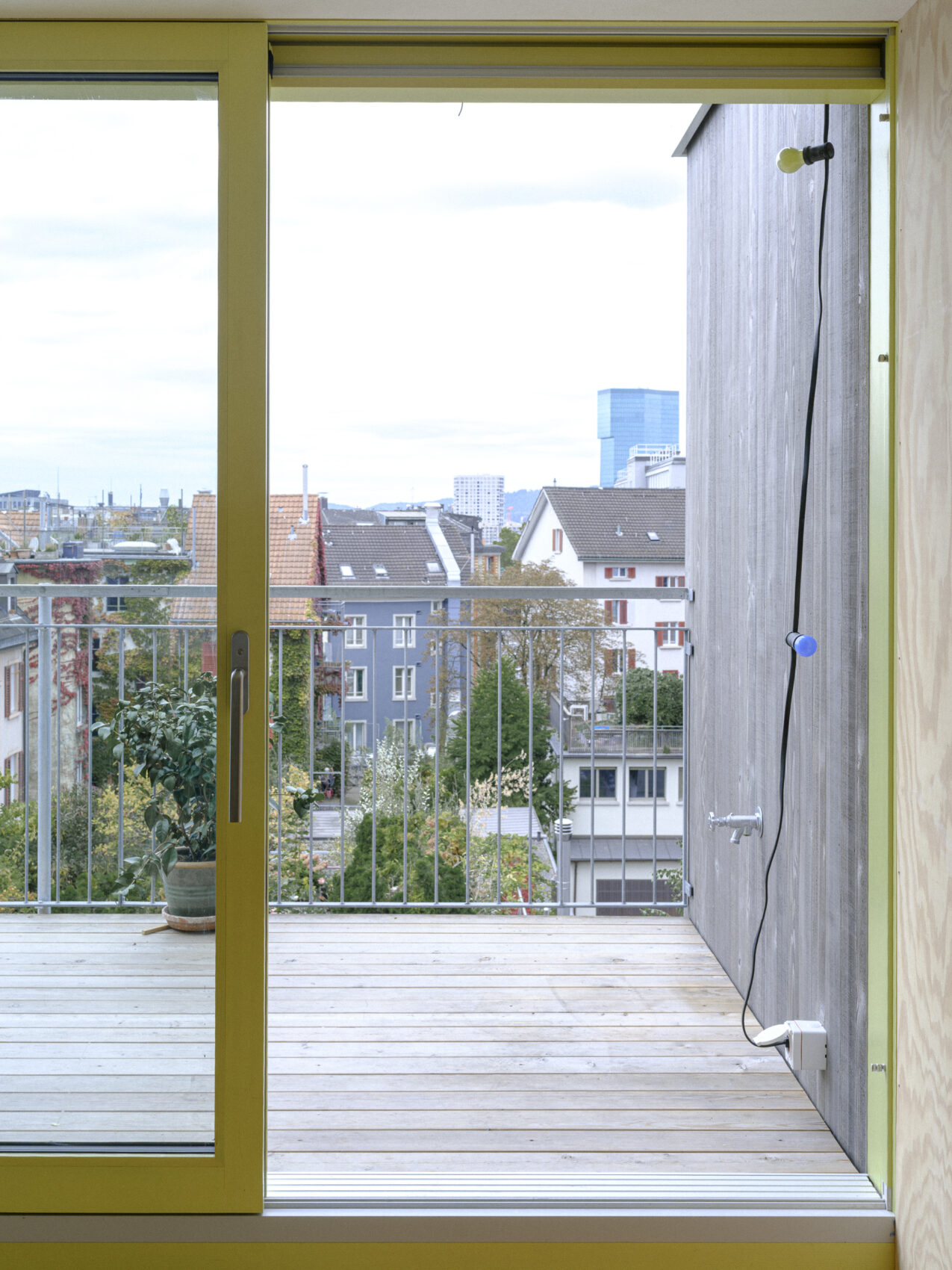
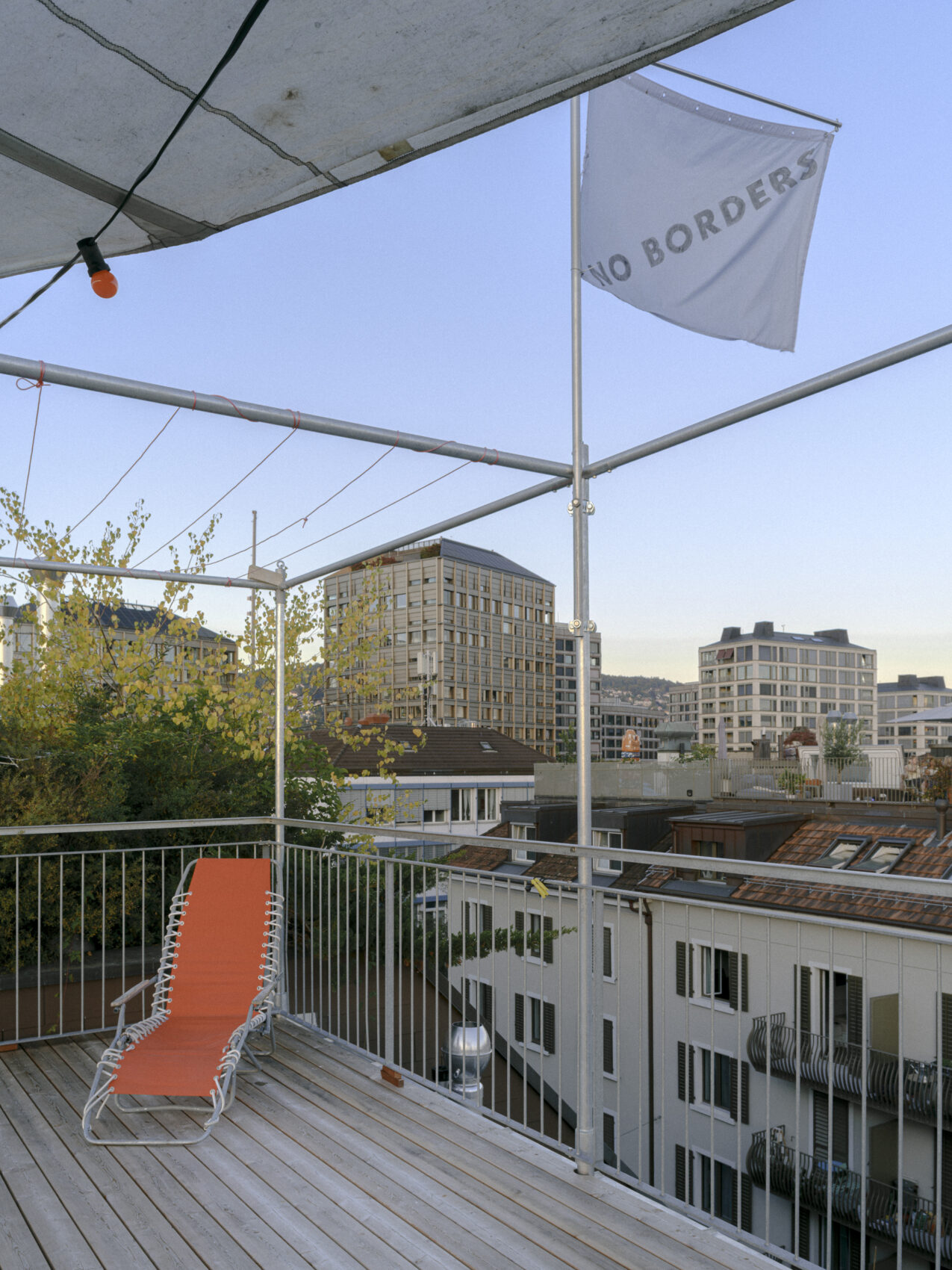
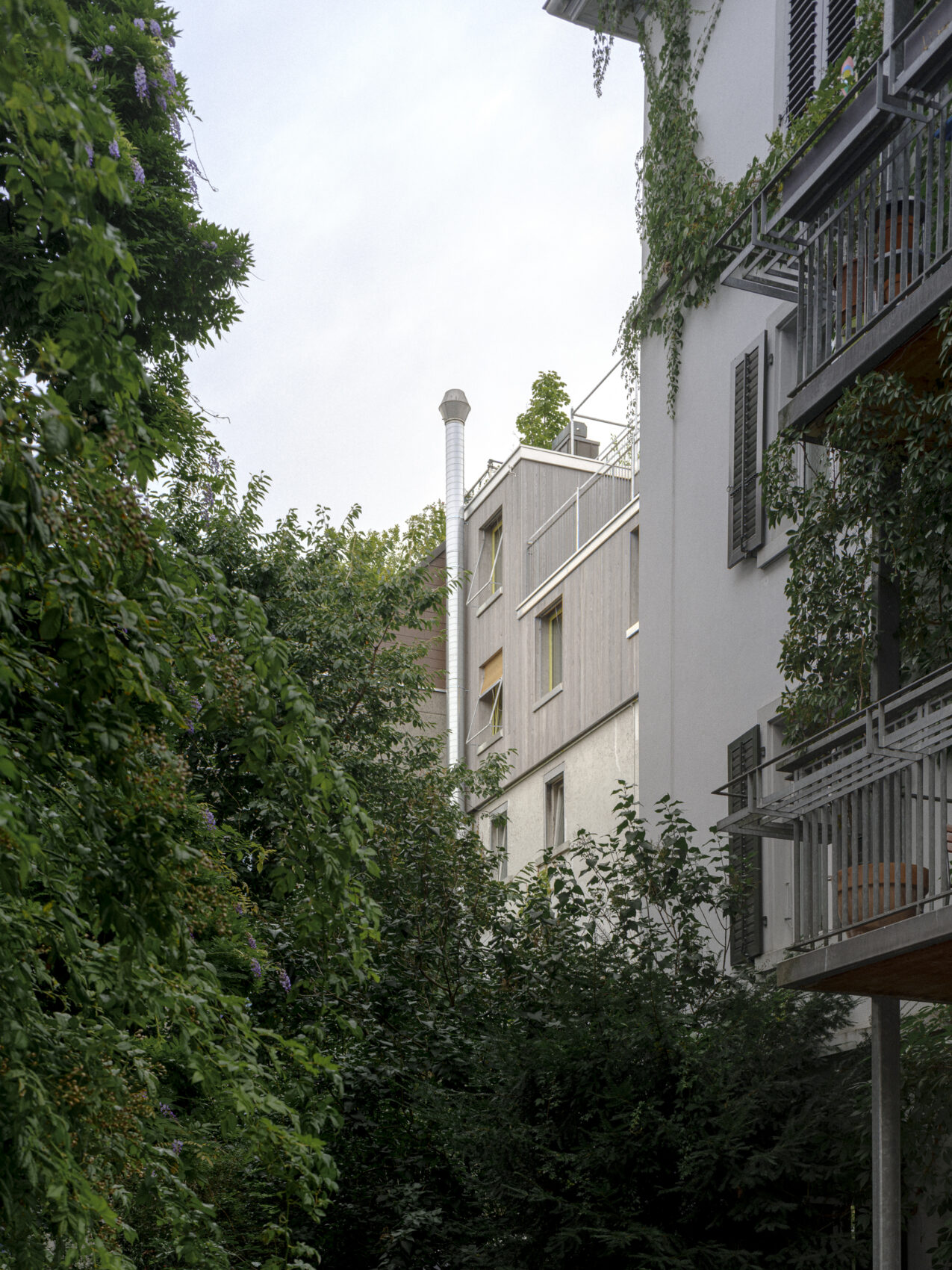
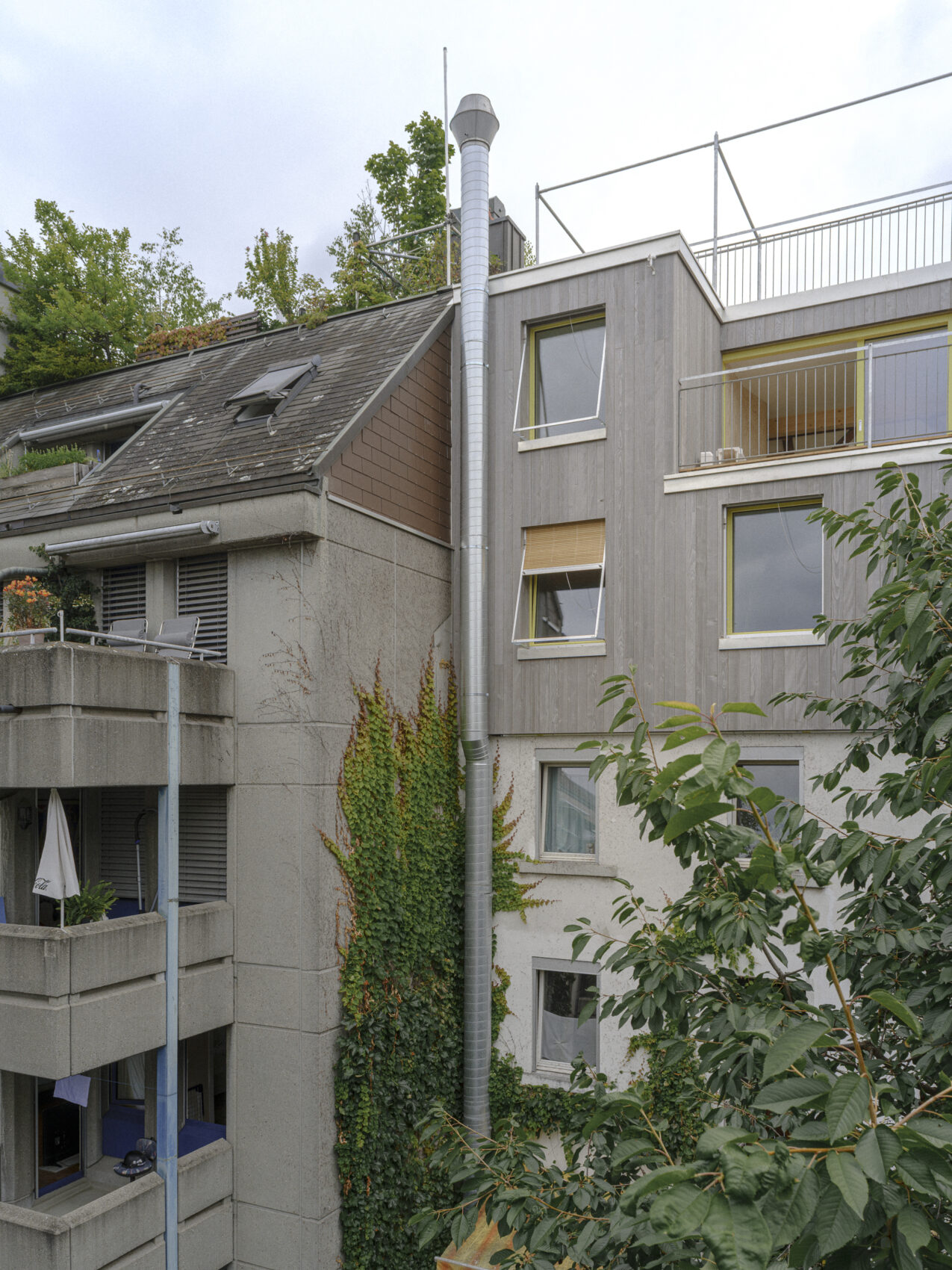
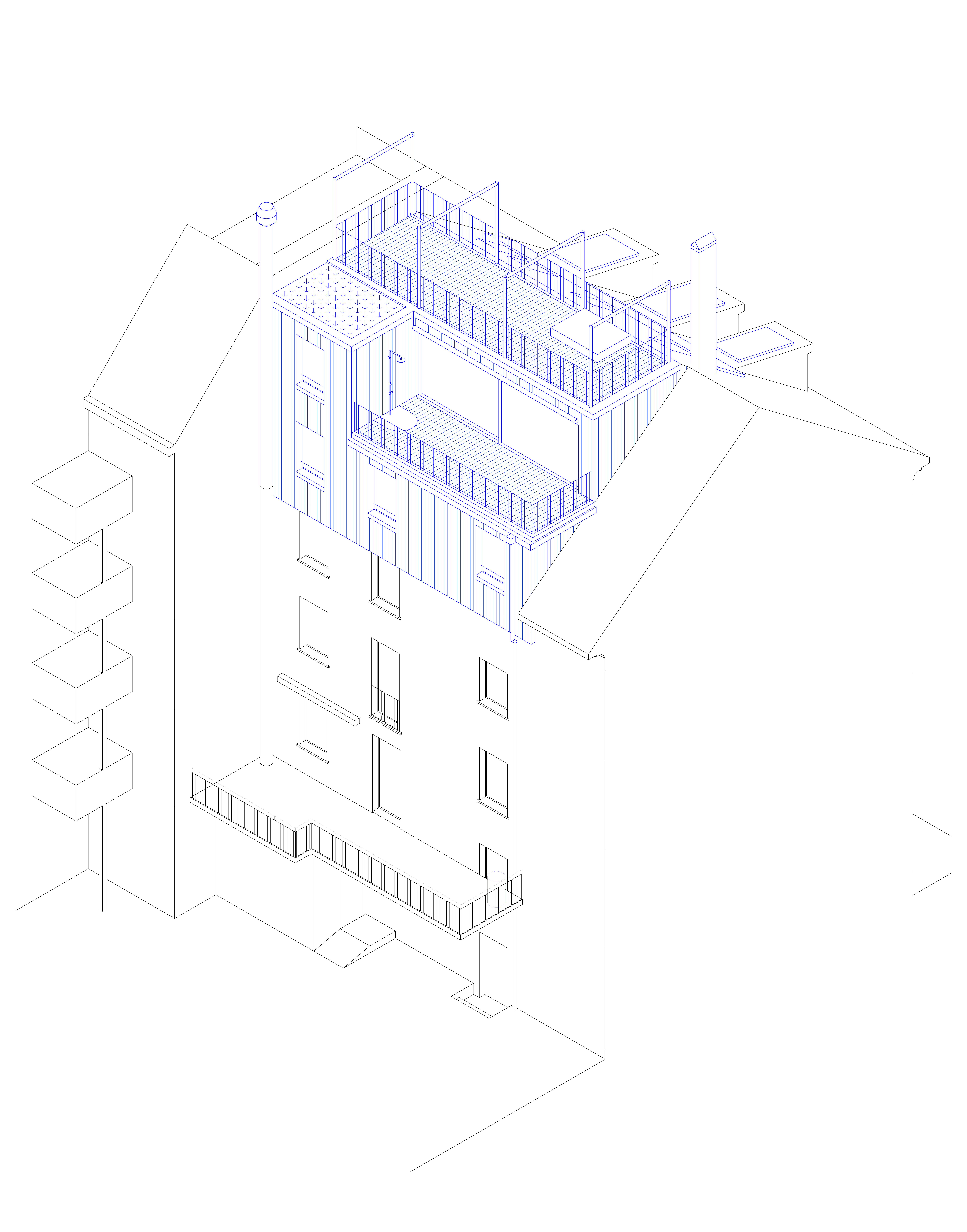
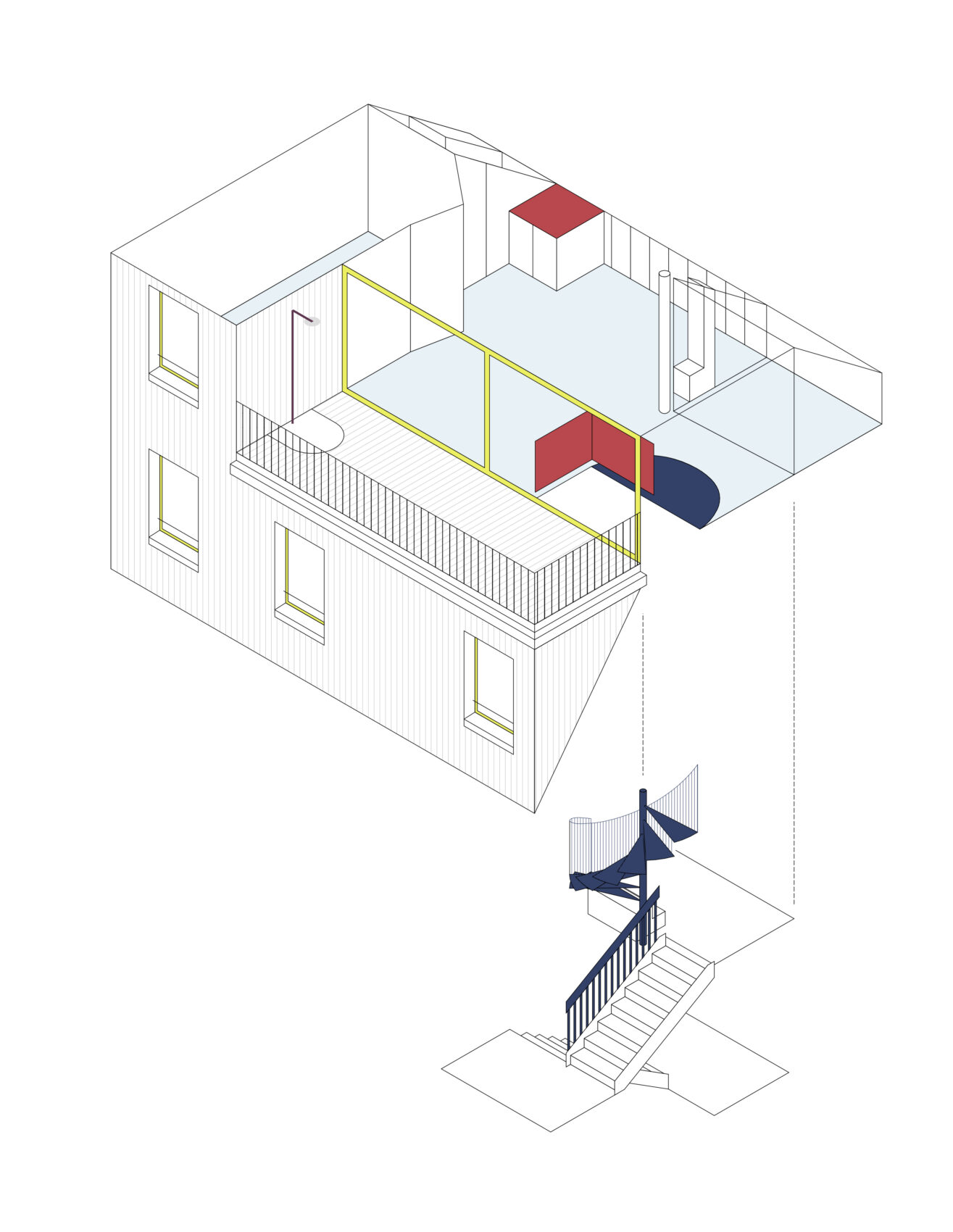
Nach dem erzwungenen Abriss einer informell errichteten Dachterrasse stellte sich die Frage, wie der verlorene Aussenraum wiedergewonnen werden könnte. Hinzu kamen ein sanierungsbedürftiges Dach und die Möglichkeit, innerhalb der Bauvorschriften ein Stockwerk aufzustocken, sofern das Dachprofil zur Strasse hin unverändert bleibt. Das Ergebnis ist eine Aufstockung in Form eines hybriden Daches: Die Strassenansicht bleibt erhalten, während zum Hof hin ein zusätzliches Stockwerk aufgesetzt wird. Dadurch entstehen zwei Terrassen als gemeinschaftlicher Aussenraum.
Following the forced demolition of an informally constructed rooftop terrace, the question was how to regain the lost outdoor space. Other factors included a roof in need of renovation and the possibility of adding a story within the building code, provided that the roofline facing the street remained unchanged. The result is an addition in the form of a hybrid roof: the street-facing appearance is preserved, while an additional story is added facing the courtyard. This creates two terraces serving as a shared outdoor space.
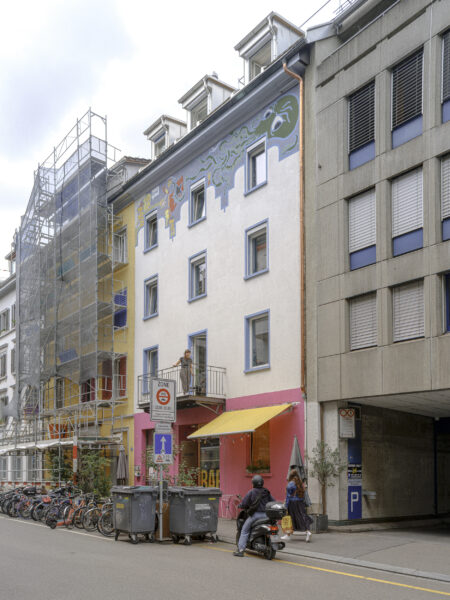
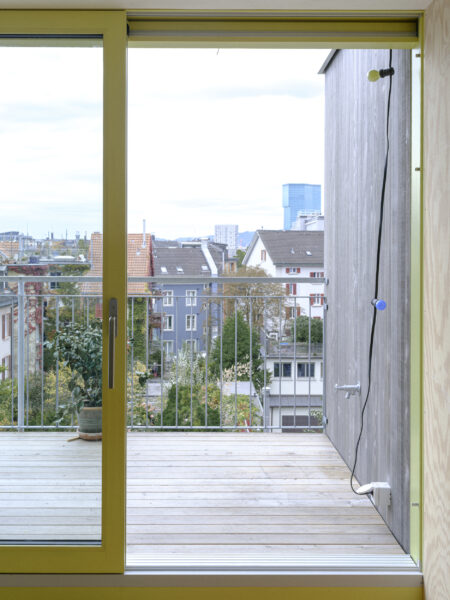
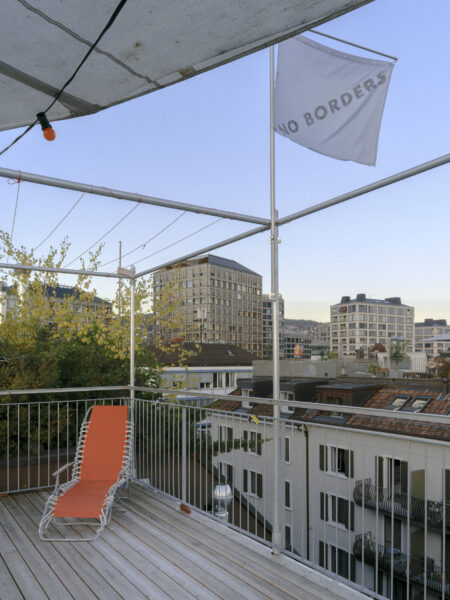
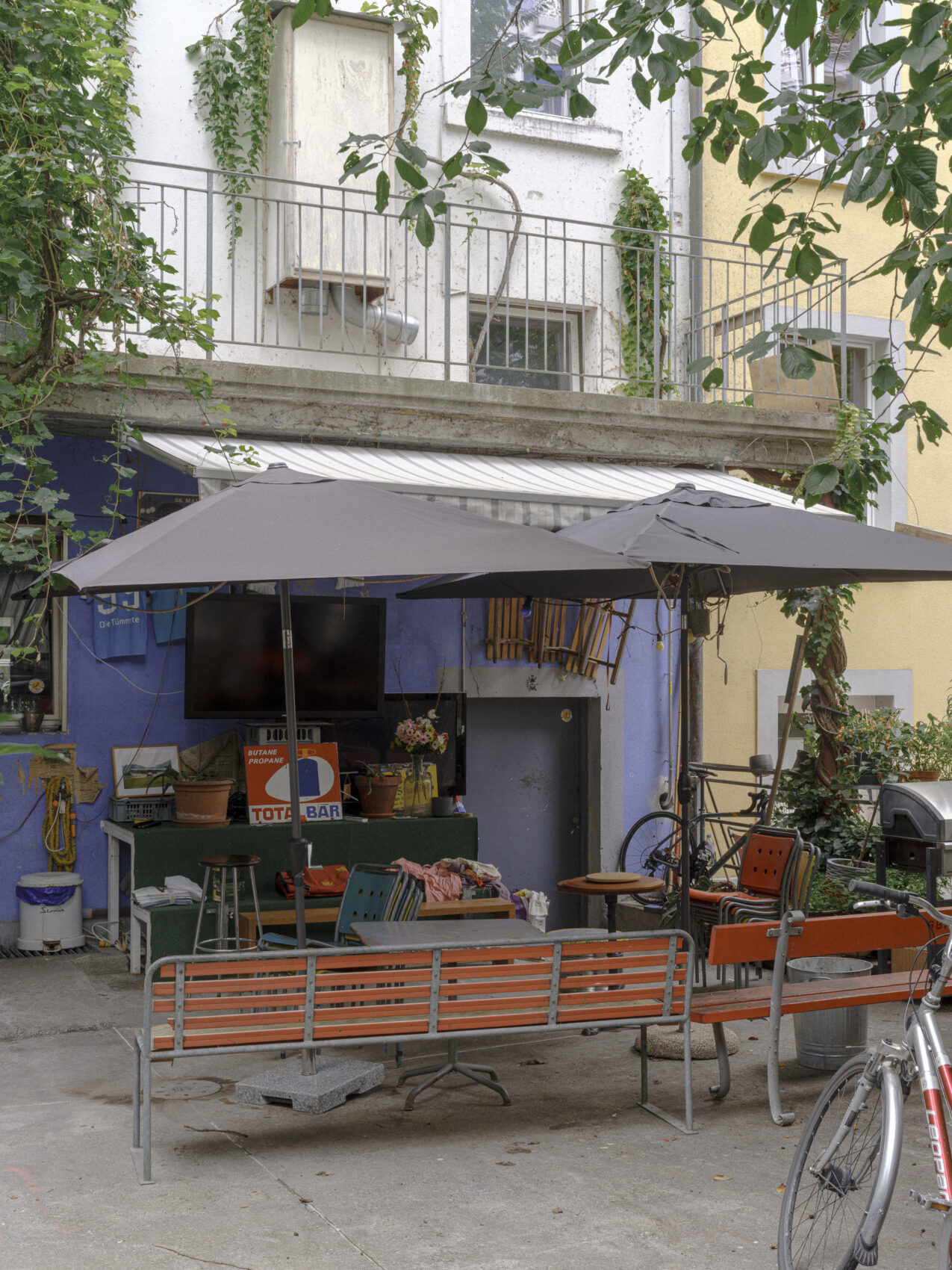
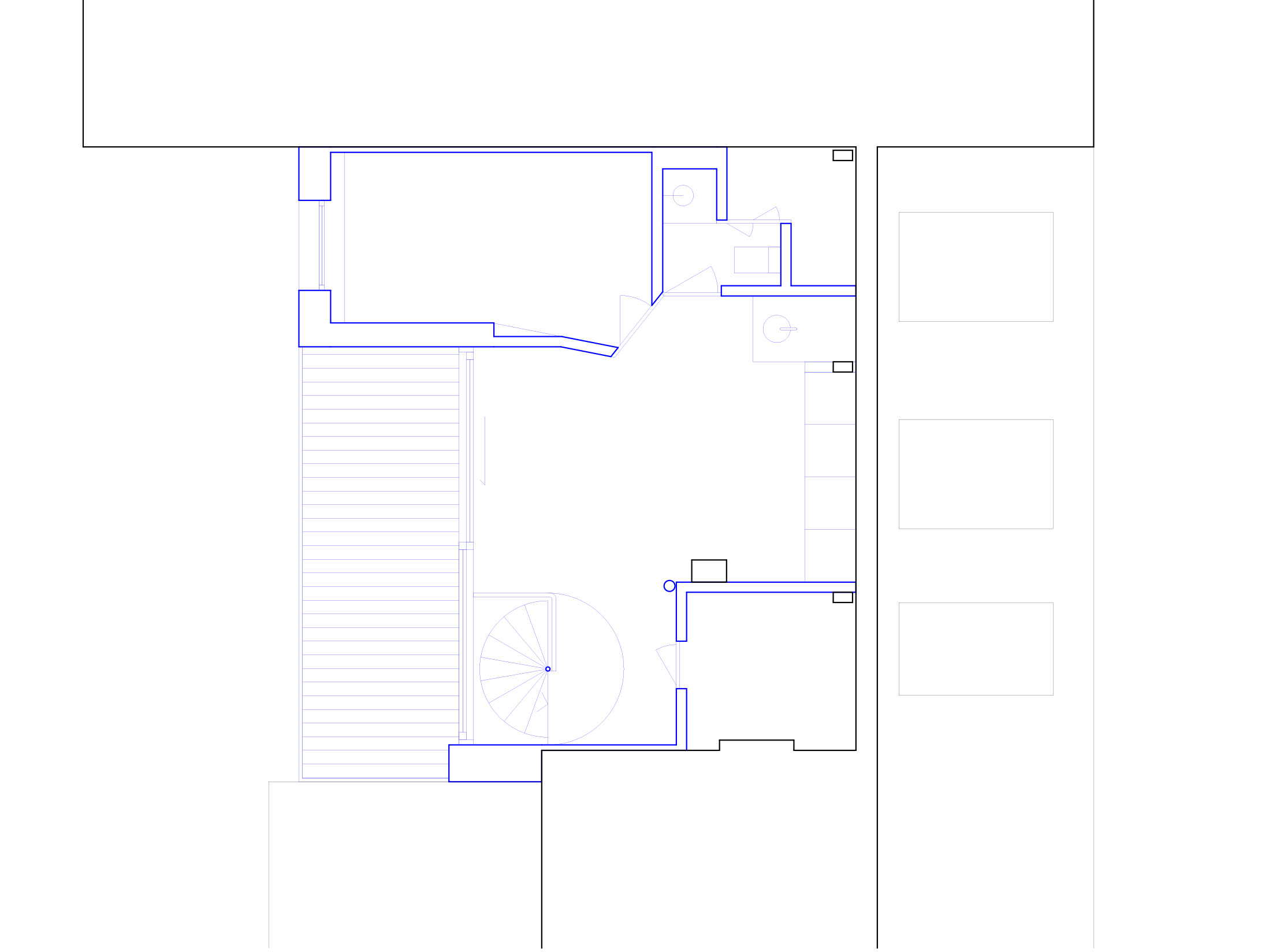
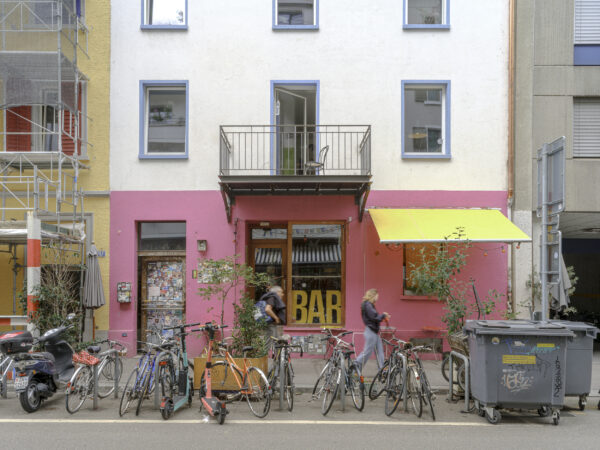
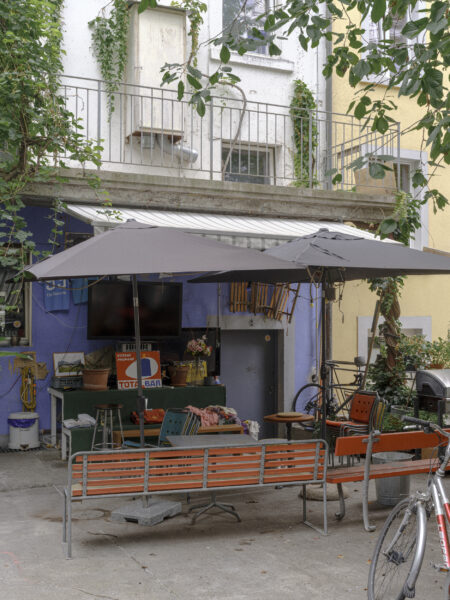
Bis 1996 wurde das Haus geschossweise bewohnt. Seit dem Einzug der Genossenschaft Durchbruch leben in den oberen Stockwerken zwölf Personen in einer grossen WG. Im Erdgeschoss befindet sich die Totalbar, deren Betreiber*innen selbst im Haus wohnen. Die Aufstockung schafft zusätzlichen Aussenraum, einen neuen Gemeinschaftsraum, ein Schlafzimmer und ein Gästezimmer.
Until 1996, the building was occupied floor by floor. Since the Durchbruch cooperative moved in, twelve people have been living together in a large shared apartment on the upper floors. The ground floor houses the Totalbar, whose staff also live in the building. The addition of a new floor creates extra outdoor space, a new common room, a bedroom, and a guest room.
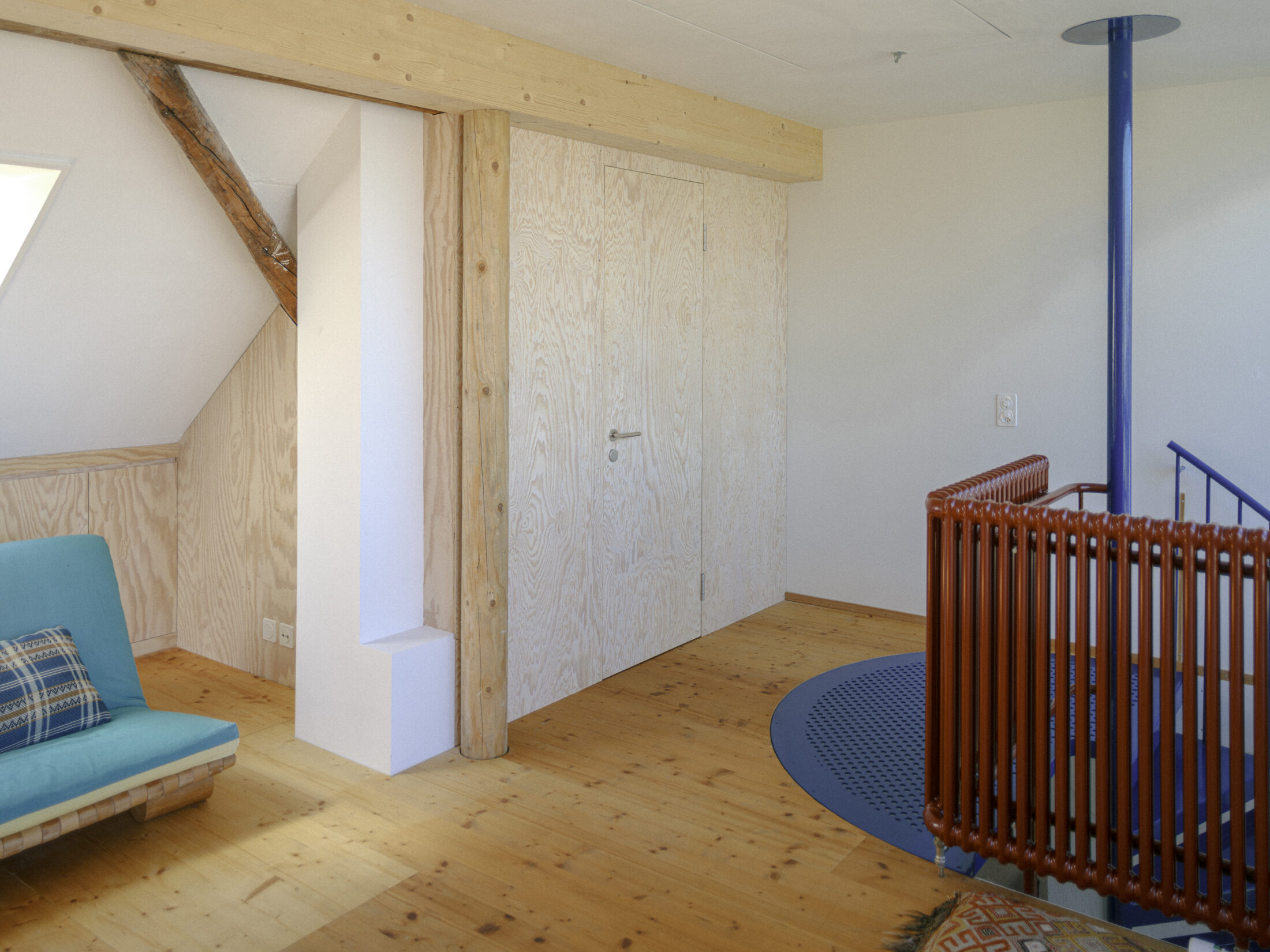
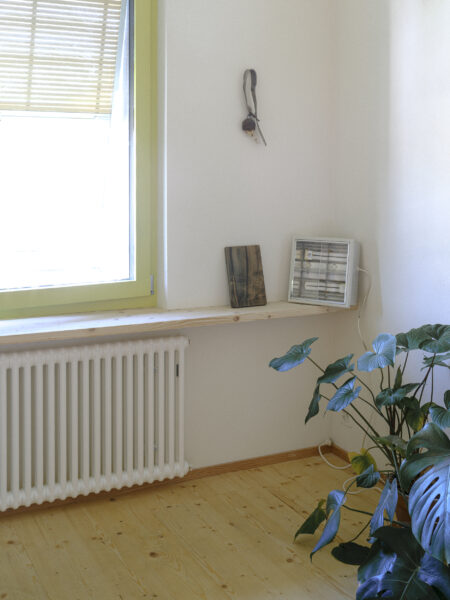
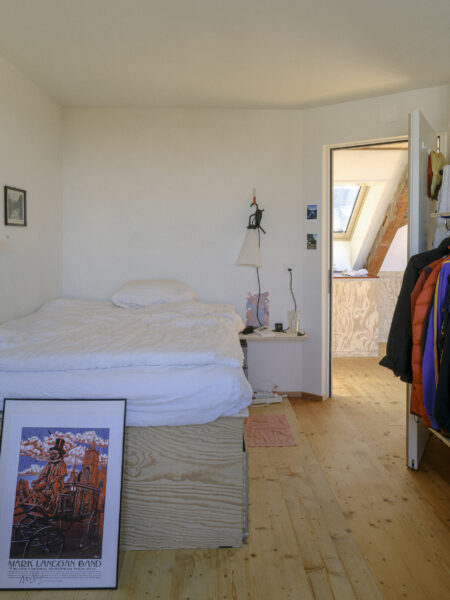
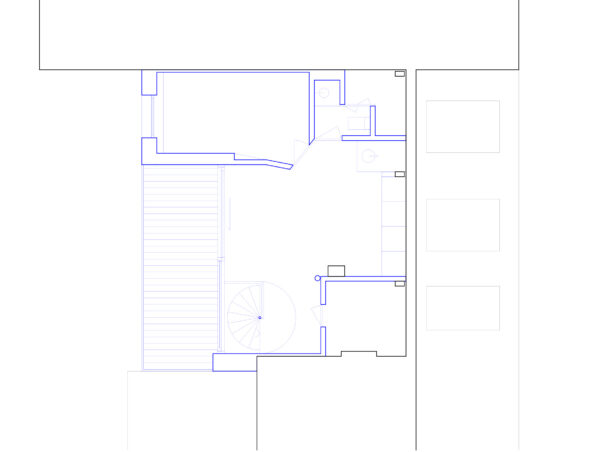
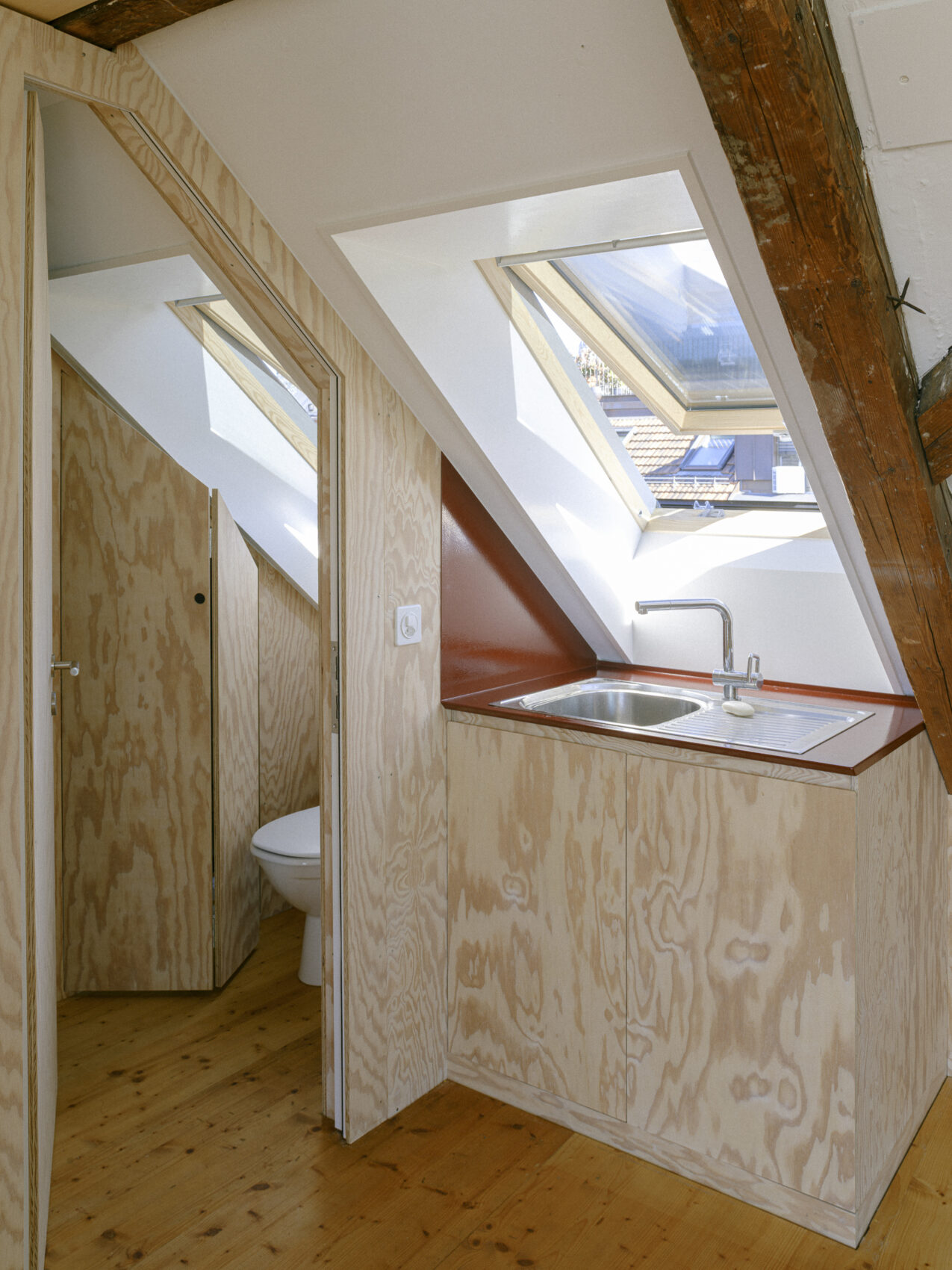
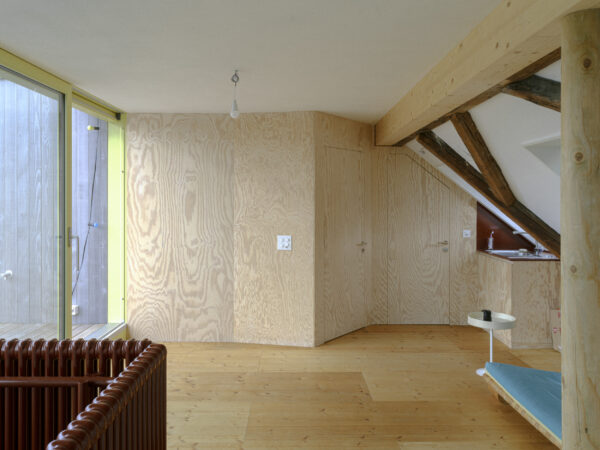
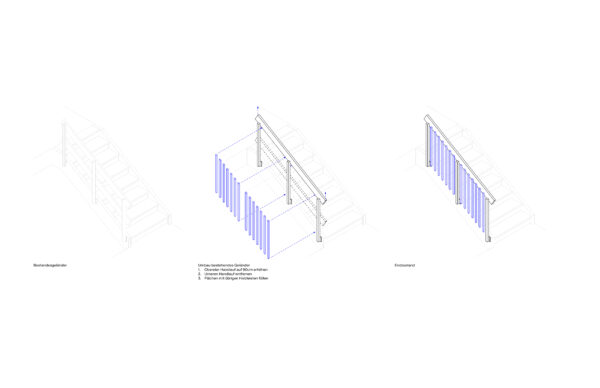
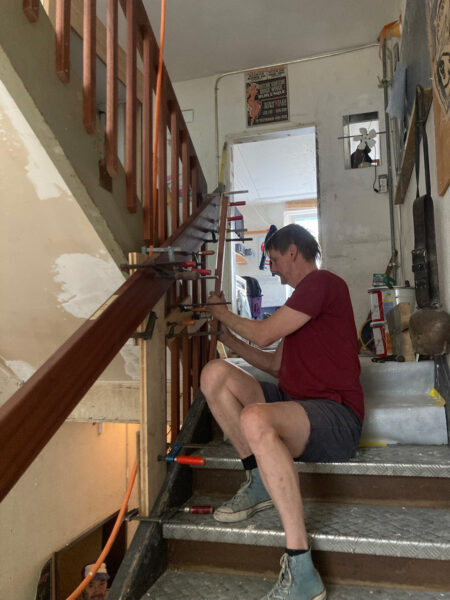
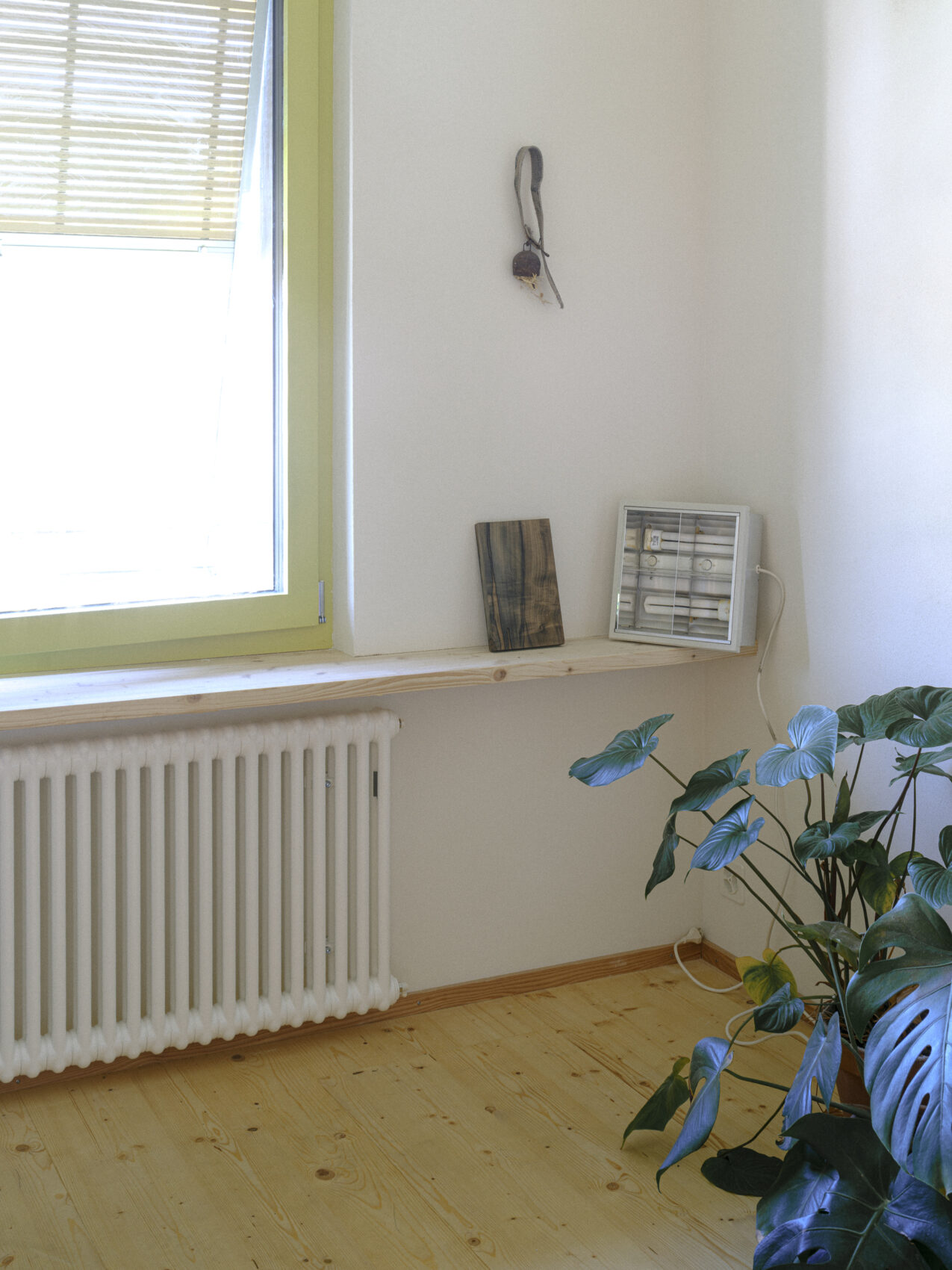
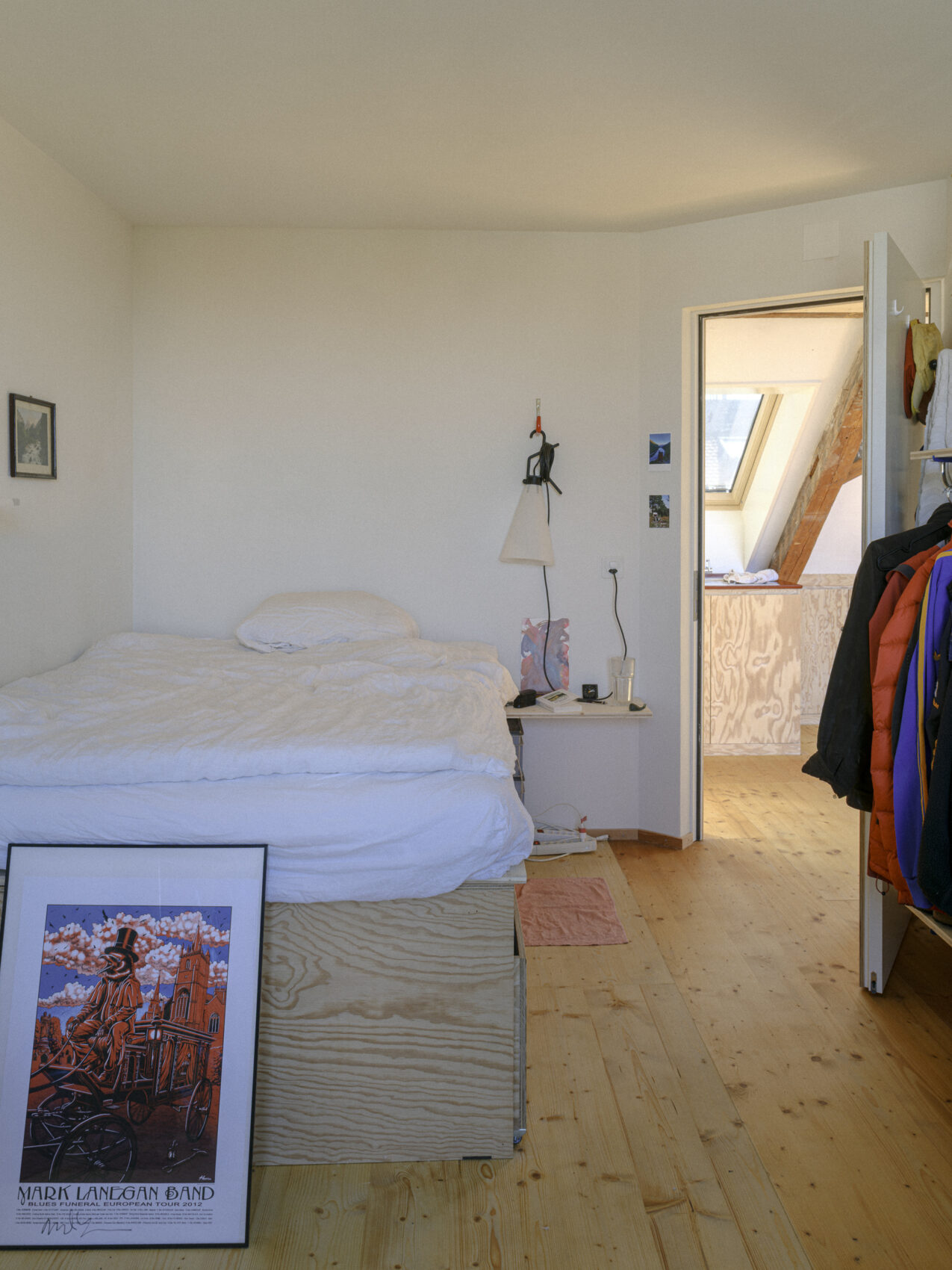
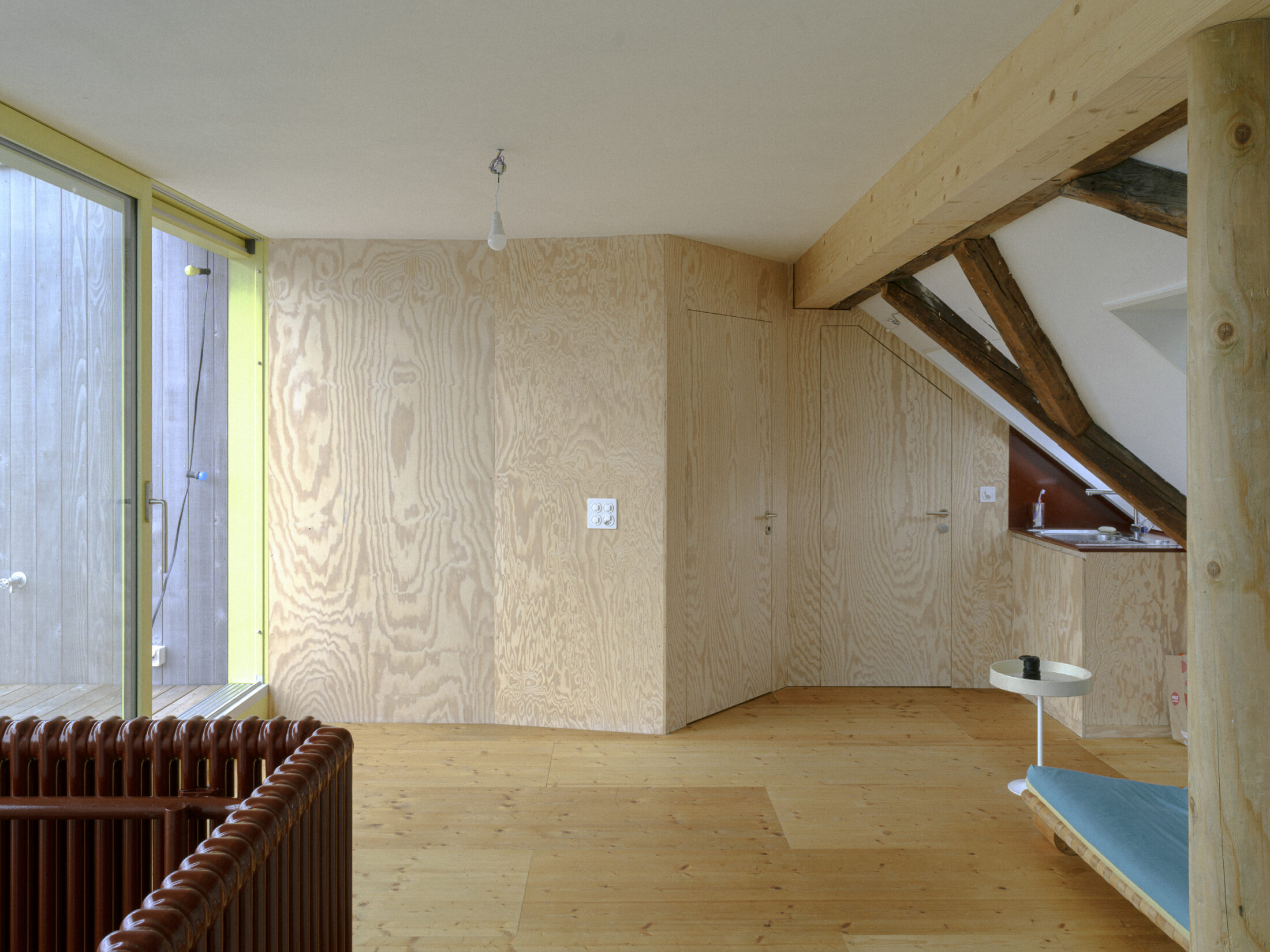
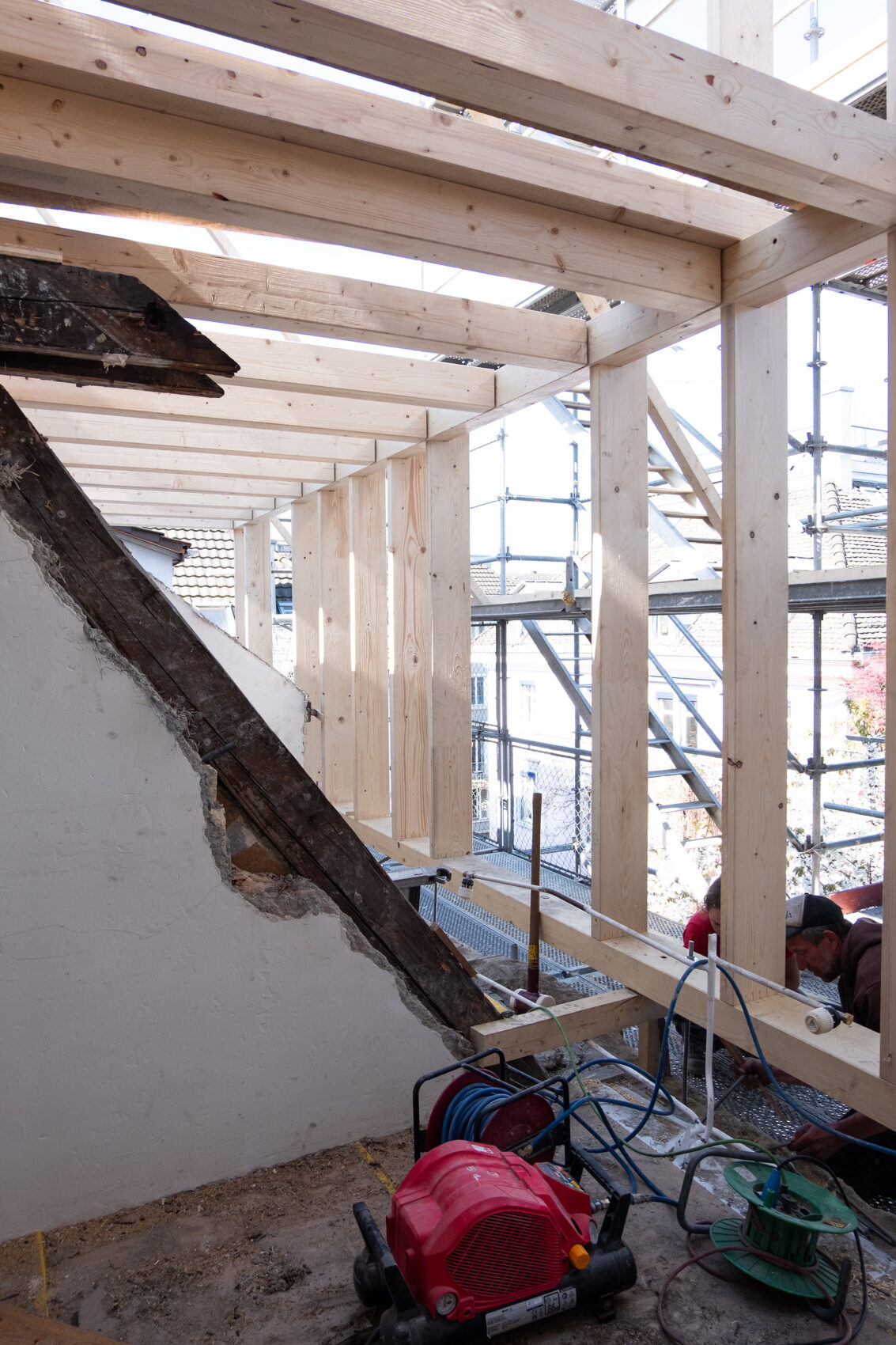
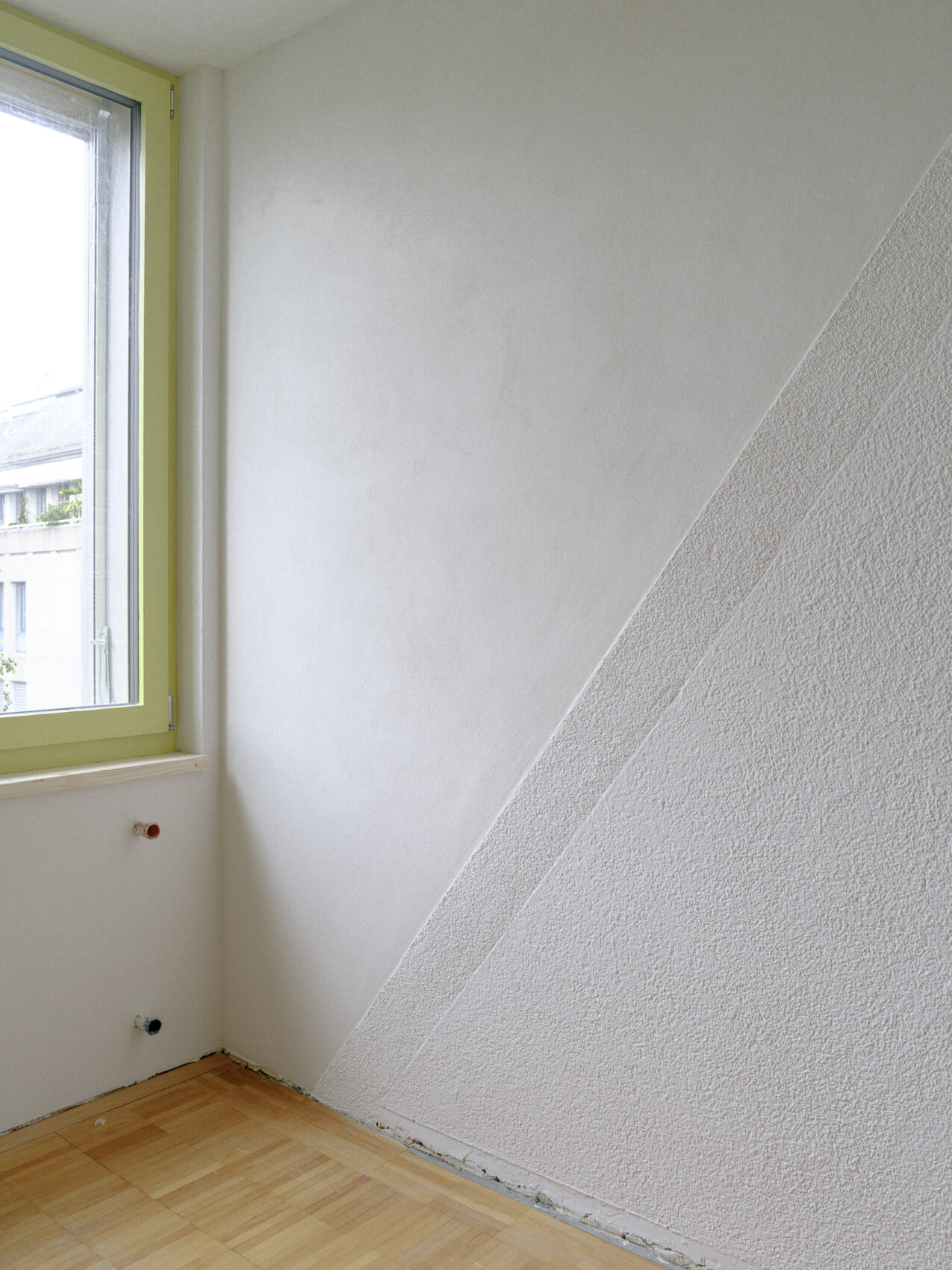
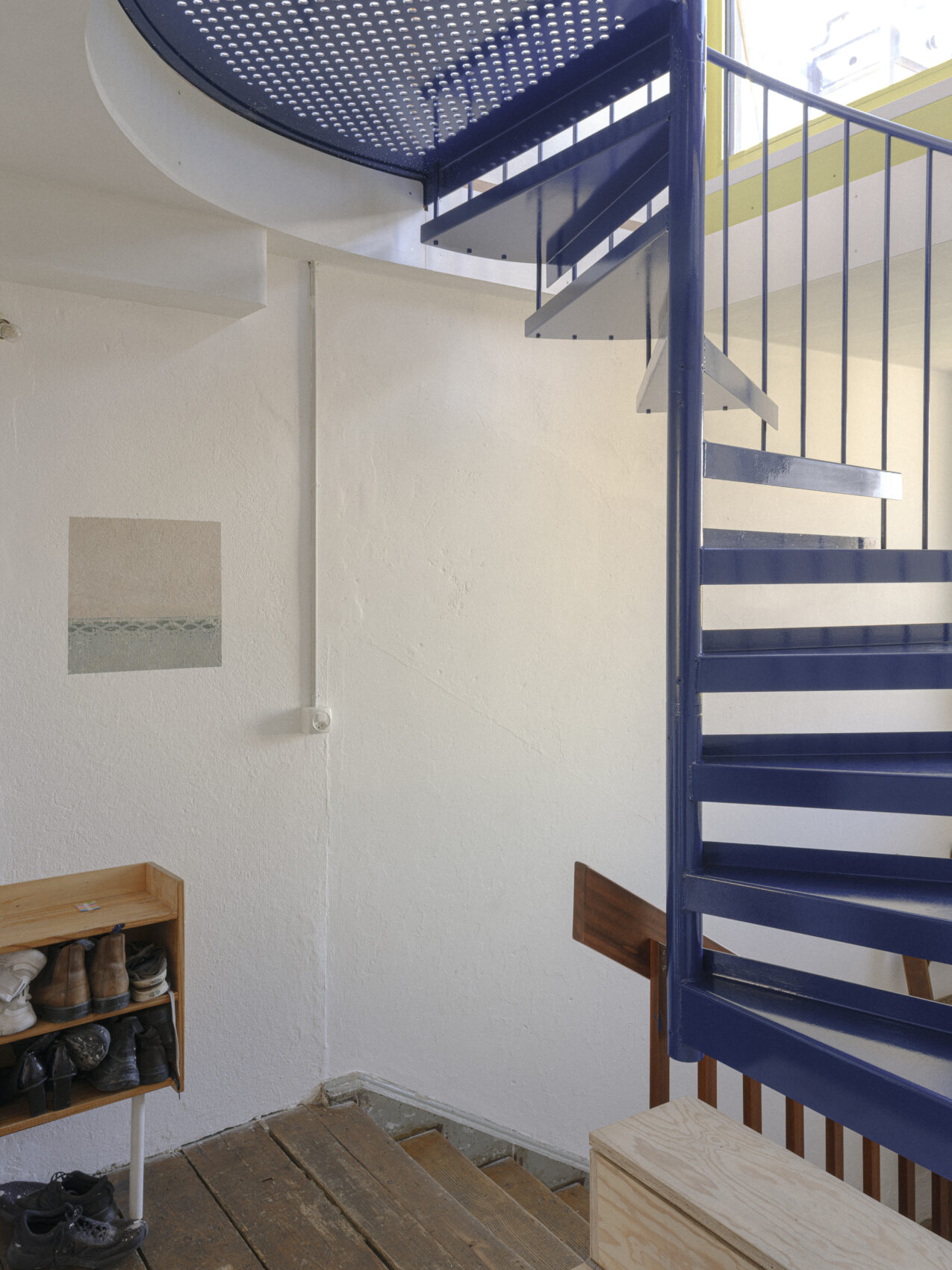
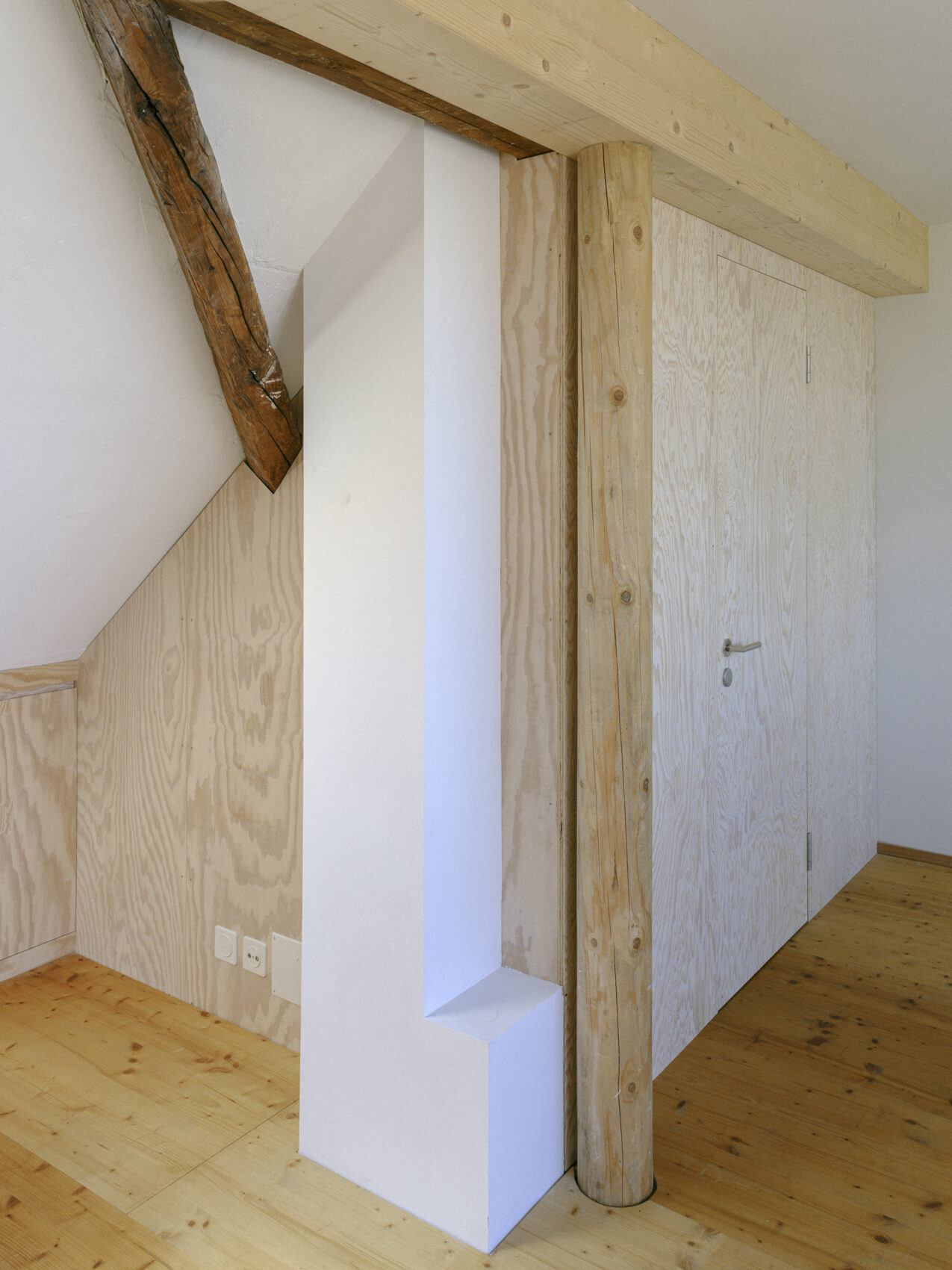
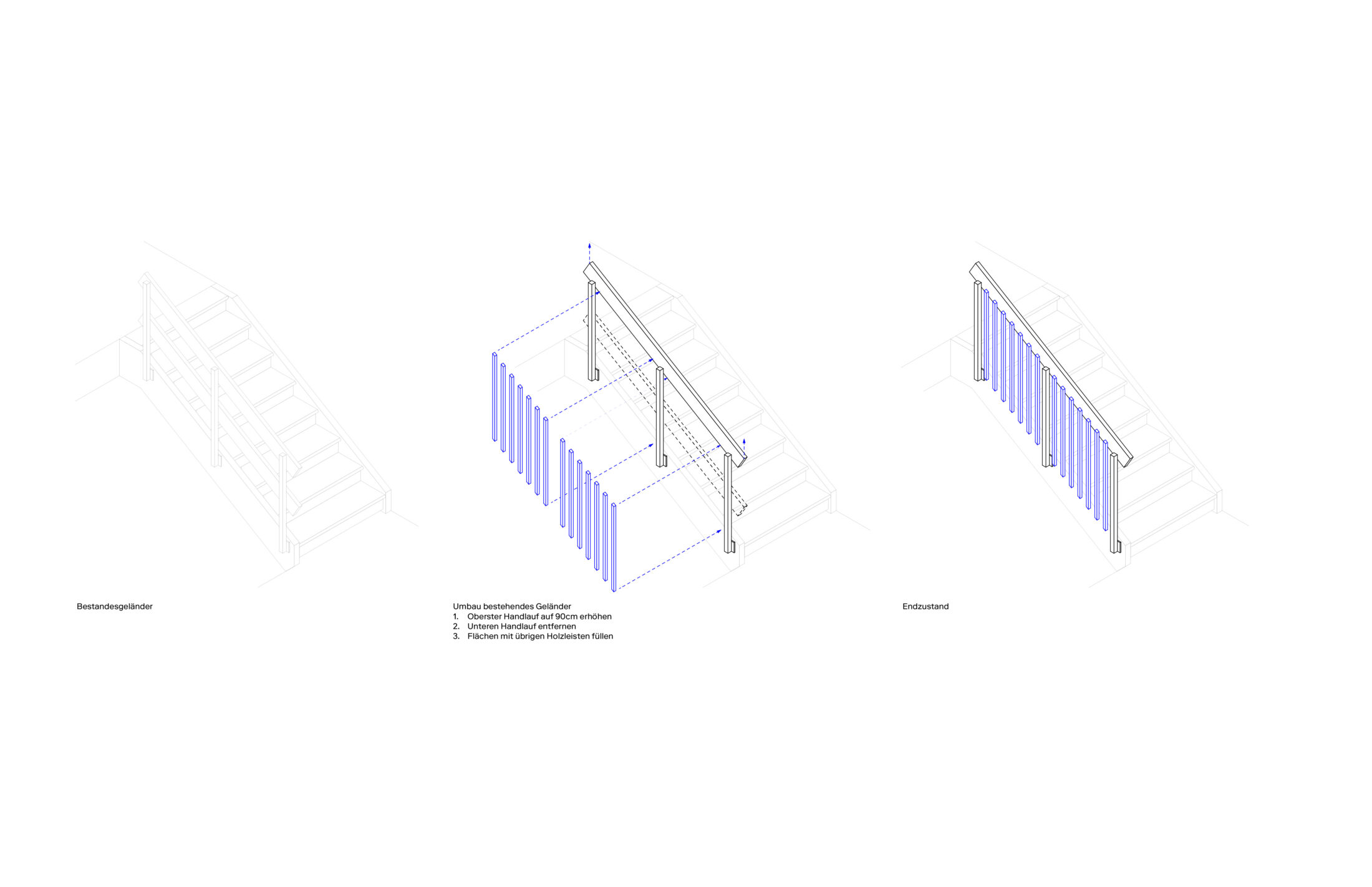
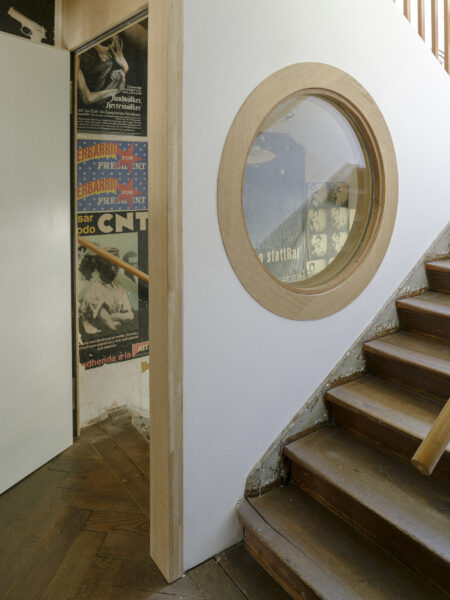
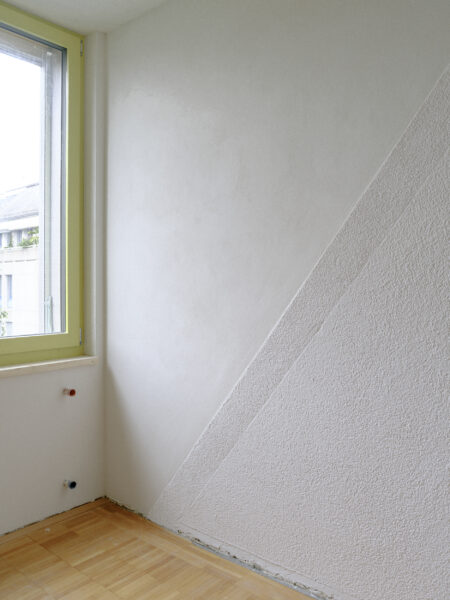
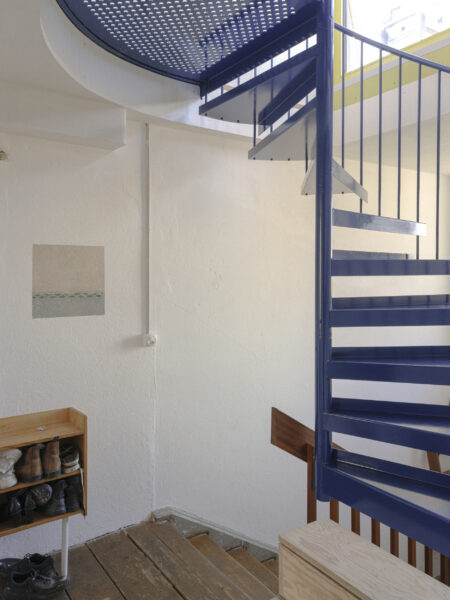
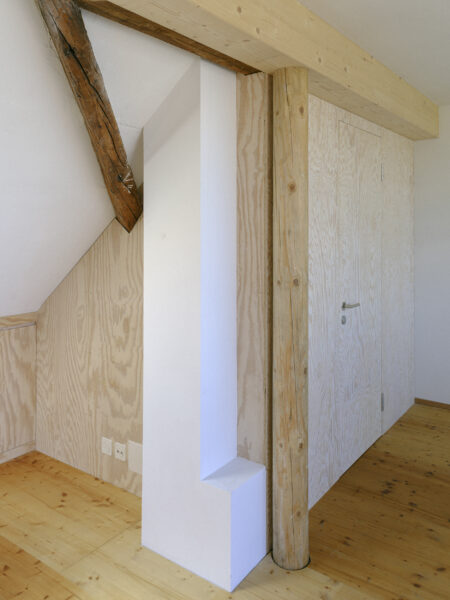
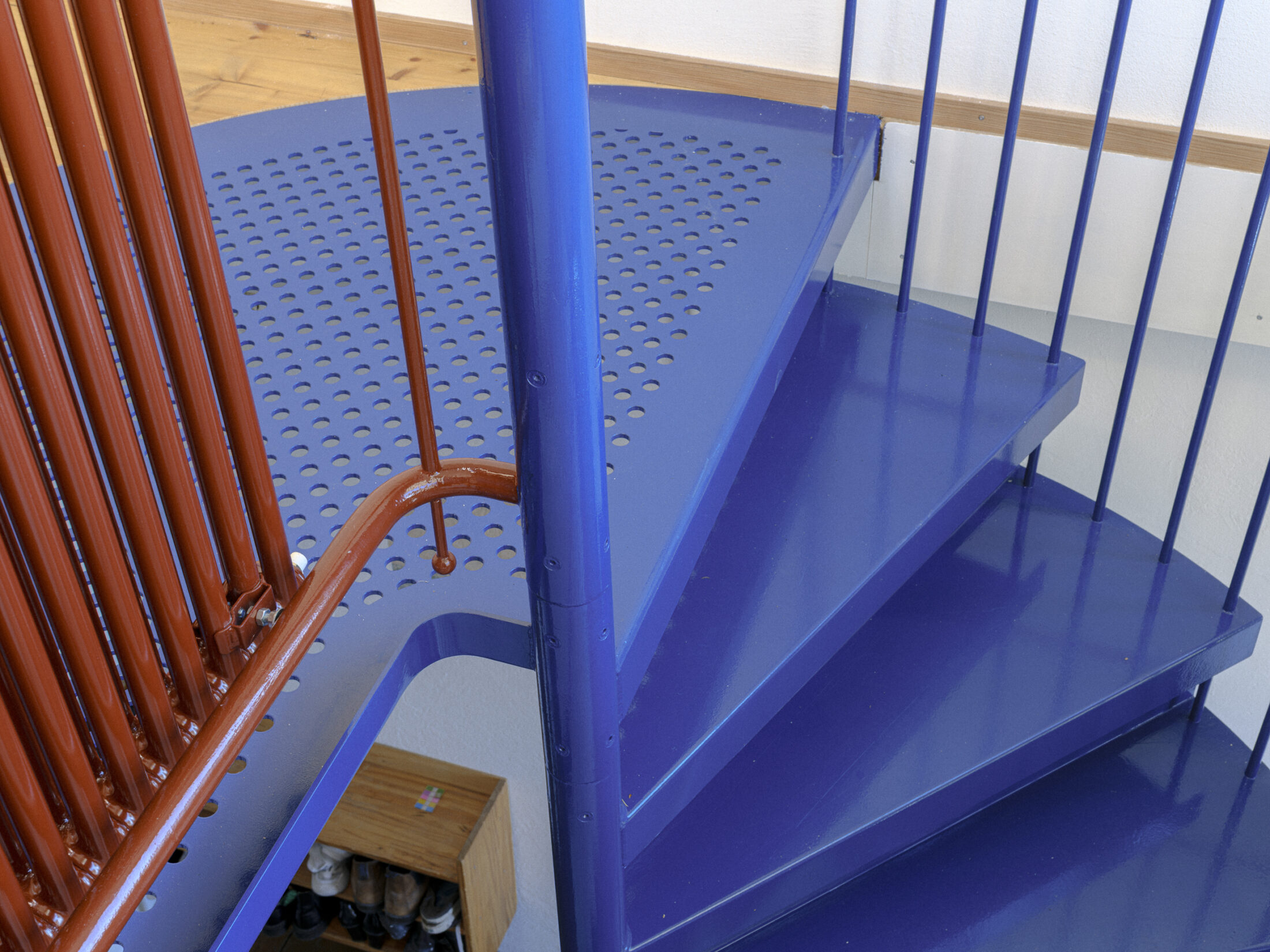
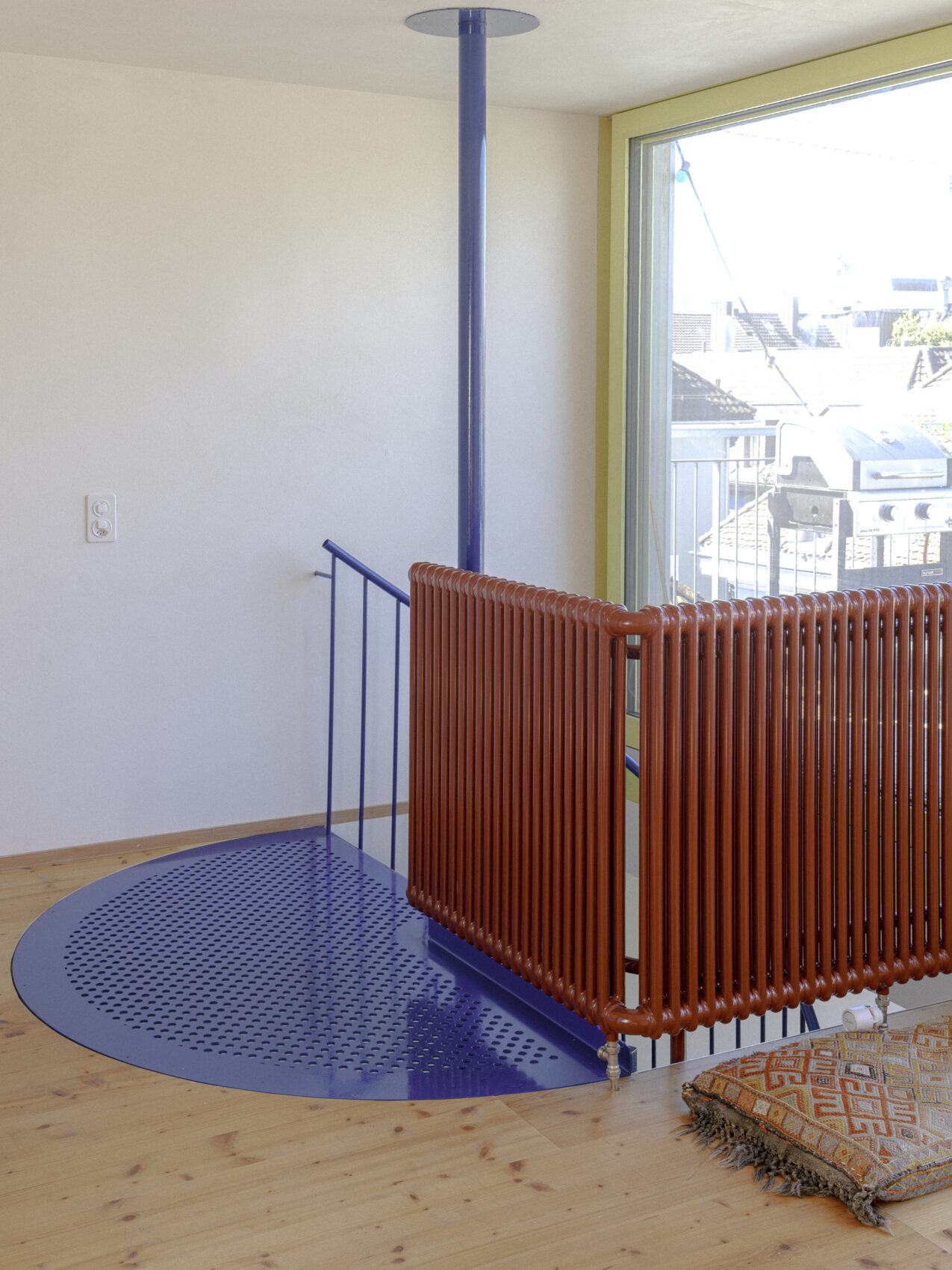
Die Aufstockung sitzt wie ein Hut auf dem bestehenden Haus. Abgesehen von notwendigen Brandschutzmaßnahmen und der Ertüchtigung des Treppenhausgeländers blieb der Bestand unangetastet. Der Eingriff wurde im bewohnten Zustand umgesetzt. Die Erweiterung ist als Holzbau ausgeführt, die Innenwände sind als Holzständerkonstruktion ausgebildet und mit Holz- und Lehmbauplatten verkleidet. Das Zusammentreffen von Alt und Neu bleibt sichtbar: Die frühere Dachschräge zeichnet sich an den Innenwänden ab, da lediglich das neu ausgefüllte Giebeldreieck verputzt wurde. Die alte Firstpfette wurde aufgedoppelt und bleibt roh und sichtbar. Die Spindeltreppe ins neue Dachgeschoss berührt den Bestand nicht – sie wird vom Dach getragen und hängt in das letzte Obergeschoss herab.
The addition sits atop the existing house like a hat. Aside from necessary fire safety measures and the renovation of the staircase railing, the existing structure remained untouched. The work was carried out while the house was occupied. The addition is constructed of wood; the interior walls feature a wood-frame structure and are clad with wood and clay building panels. The meeting of old and new remains visible: the former roof slope is visible on the interior walls, as only the newly filled gable triangle was plastered. The old ridge beam was doubled and remains raw and visible. The spiral staircase to the new attic does not touch the existing structure – it is supported by the roof and hangs down into the top floor.
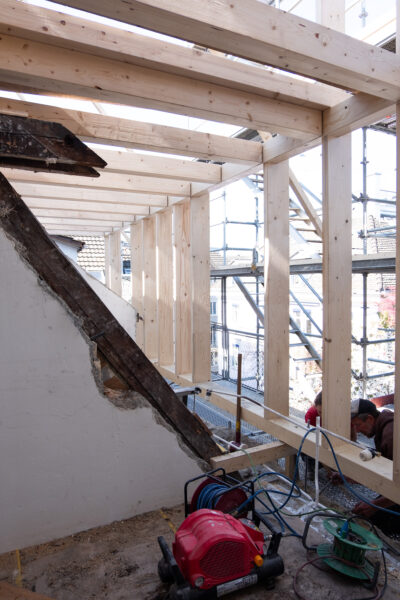
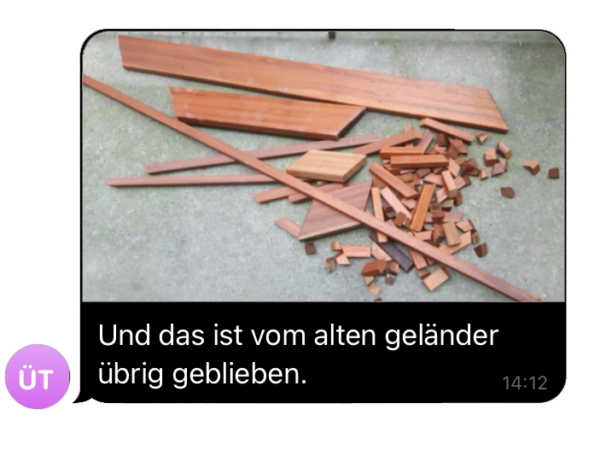
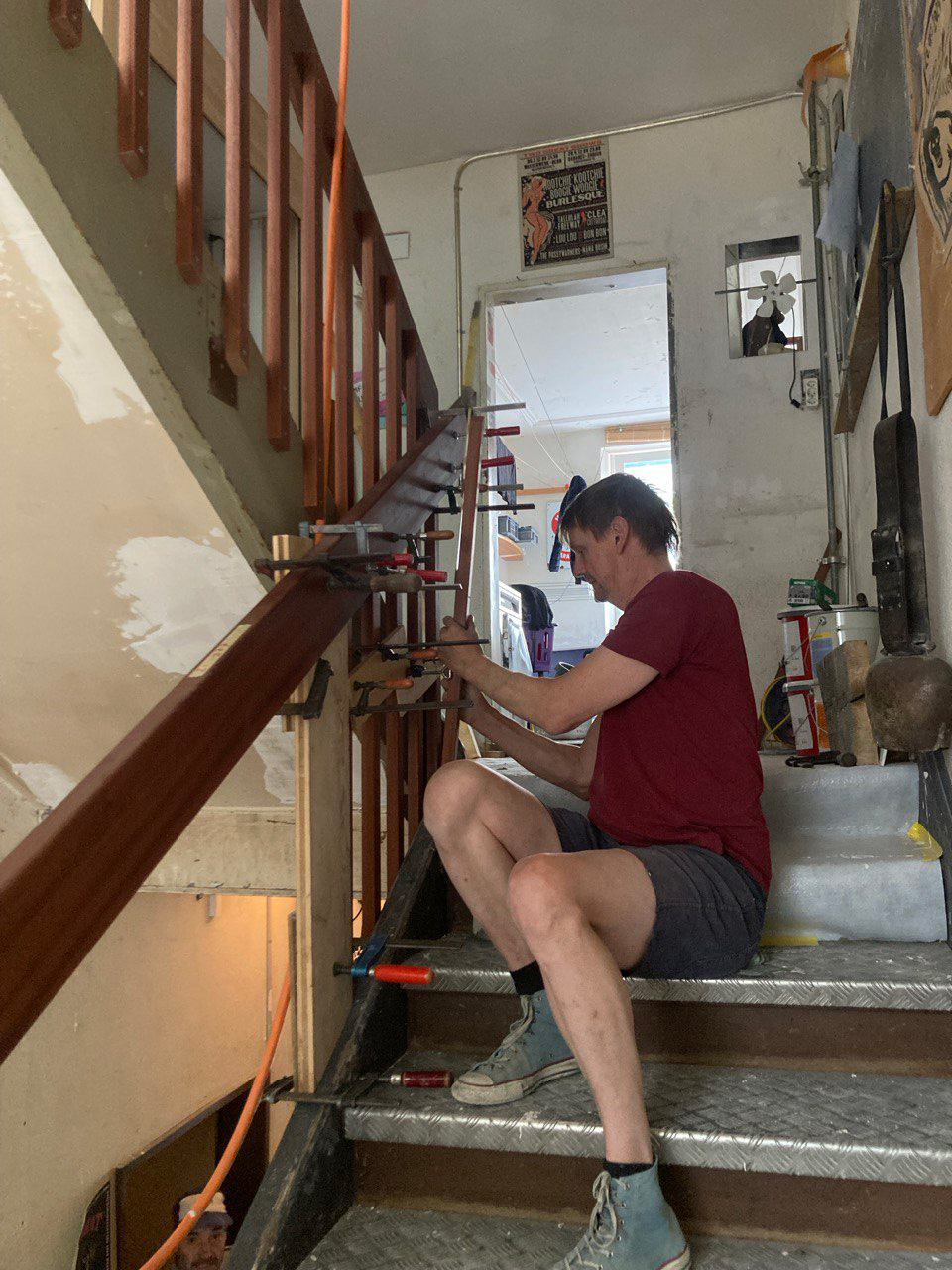
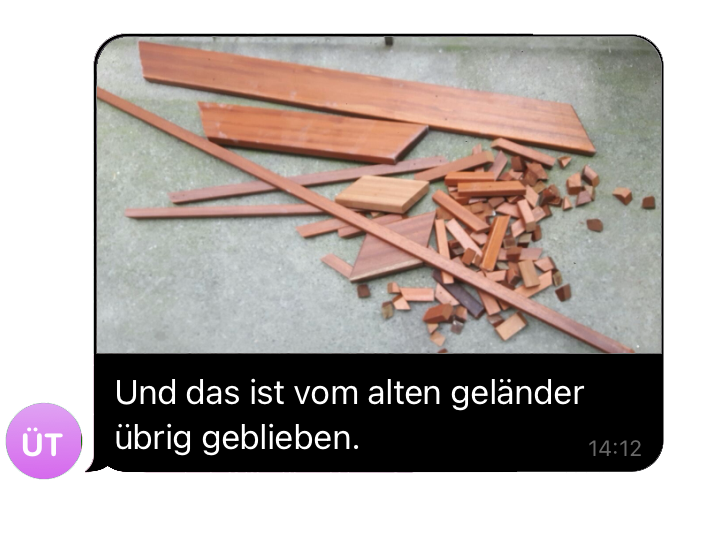
Der Entwurfsprozess wurde in Workshops und Arbeitsgruppen gemeinsam mit den zwölf Hausbewohner*innen gestaltet. Diese trugen nicht nur zur architektonischen Entwicklung des Projekts bei, sondern organisierten auch die Wiederverwendung von Bauteilen und übernahmen Teile der Ausführung. Neben ökologischen Aspekten der Nachhaltigkeit war ein wesentliches Element des Projekts die Mitwirkung der Bewohner*innen. Eine langjährige Kultur der Selbstorganisation und des kollektiven Weiterbauens im Dialog mit den Architekt*innen fortschreibend, verstehen wir das Bauen als soziale Praxis.
The design process was developed in workshops and working groups together with the twelve residents. They not only contributed to the architectural development of the project but also organized the reuse of building materials and took on parts of the construction work. In addition to ecological aspects of sustainability, resident participation was a key element of the project. Building on a long-standing culture of self-organization and collective construction in dialogue with the architects, we view building as a social practice.